
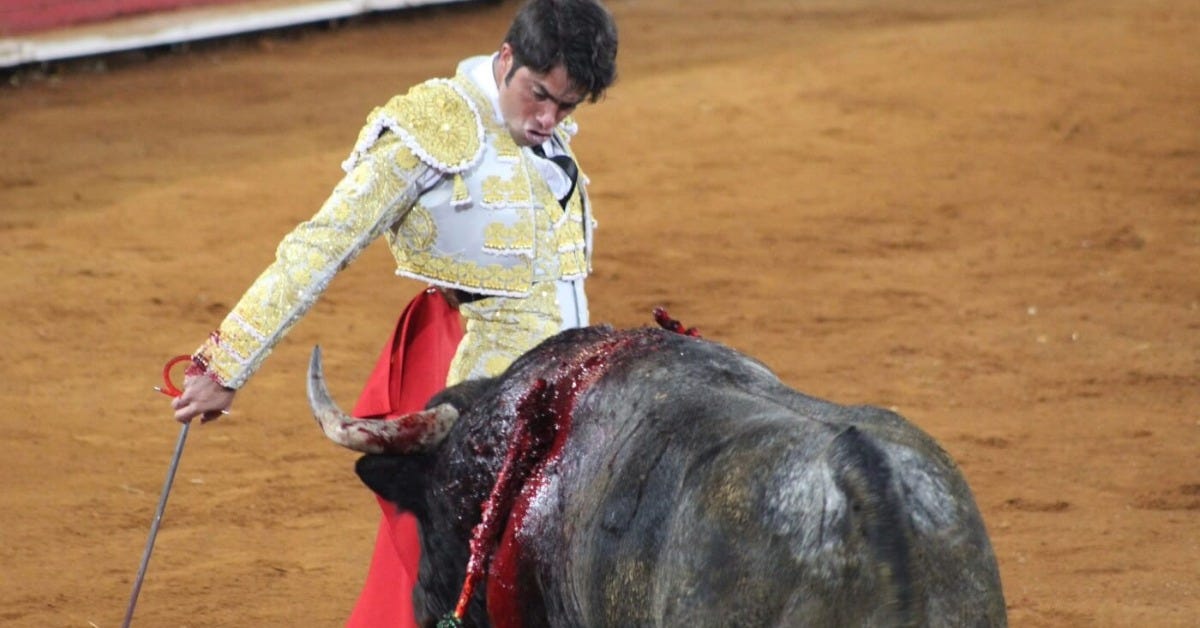
Mexico’s bullfighting debate is back before the Supreme Court, but this time the argument goes beyond tradition or public opinion. Animal-rights groups are asking justices to examine whether local permits for bullfights can stand when federal animal-health rules and Mexico’s Constitution now prohibit animal mistreatment. The case could shape how far Mexico’s new animal-protection language reaches, and whether bullfighting remains a state-by-state issue or becomes a national legal question.
Activists ask Mexico’s Supreme Court to suspend bullfighting in six states
Animal-rights groups have asked Mexico’s Supreme Court of Justice of the Nation to review legal cases seeking to suspend bullfighting in several states, arguing that the practice violates federal animal-health rules and Mexico’s newer constitutional language on animal protection.
The request targets bullfighting activity tied to six states: Hidalgo, Aguascalientes, Jalisco, Nuevo León, Guanajuato, and Baja California. A related legal filing by AnimaNaturalis and CAS International focuses on cases in five major taurine cities: Aguascalientes, Guadalajara, León, Monterrey, and Pachuca.
The groups argue that local governments cannot issue permits for bullfights if the events conflict with higher-ranking laws. Their legal position relies on the Federal Animal Health Law, the animal-slaughter standard NOM-033-SAG-ZOO-2014, and Mexico’s 2024 constitutional reform, which prohibits animal mistreatment.
The request does not immediately ban bullfighting. It asks the Supreme Court to take up the matter and decide whether the lower courts should continue handling these cases separately or whether the country needs a single national legal standard.
A legal fight over tradition, permits and animal cruelty
Bullfighting has long been defended by supporters as a cultural tradition, an art form, and a source of work for breeders, matadors, vendors, and arena staff. In several Mexican states, lawmakers have tried to protect it as part of local heritage.
Opponents argue that tradition cannot override animal-welfare protections. They say the central legal issue is not whether people enjoy bullfighting, but whether public authorities can permit an event where an animal is injured and killed for entertainment.
That distinction matters because Mexico’s legal framework has changed. In December 2024, a constitutional reform added language stating that animal mistreatment is prohibited and that the Mexican state must guarantee animal protection, proper treatment, conservation, and care.
Activists now argue that municipal permits based on local taurine regulations are no longer enough. In their view, those permits must also comply with federal law and constitutional standards.
The animal-health argument behind the case
A key part of the case centers on animal-health law, not only animal-rights language.
The groups argue that bullfighting does not meet the legal grounds for killing animals under Mexico’s health and slaughter rules. They say the law allows animal death in controlled situations such as food production, serious disease, emergency conditions, or public-health concerns, but not as part of a public spectacle.
They also argue that bullrings are not authorized slaughter facilities. If bulls used in fights later enter the food chain, activists say that raises a separate question about sanitary oversight and official compliance.
This is where the case may become broader than the usual moral debate over bullfighting. The Court could be asked to consider whether bullfighting is purely a cultural matter or also falls under national animal-health and public-health rules.
Mexico’s courts have already wrestled with bullfighting
The Supreme Court has dealt with related issues before, especially in Mexico City.
In 2023, the Court revoked a suspension that had stopped bullfights at Plaza México, the capital’s major bullring. That decision allowed activity to resume, but it did not settle the full constitutional debate over whether bullfighting itself should be protected or restricted.
Another Supreme Court case, involving Mexico City’s later reforms, described how the capital changed its legal framework to require bullfighting without violence. Under that model, taurine events are allowed only if the animal is not injured or killed in the ring.
Mexico City’s Congress approved those changes in March 2025. Lawmakers framed the reform as a compromise between animal welfare and cultural practice. Supporters of traditional bullfighting said the change made the spectacle unworkable. Animal-rights groups said it was progress, but not a complete solution.
A patchwork of state rules across Mexico
Bullfighting rules in Mexico vary widely by state.
Some states have banned the practice. Others still allow it. Some have given bullfighting or related events cultural-heritage status. Mexico City has taken a middle path by allowing only nonviolent taurine events.
That patchwork is one reason activists are asking the Supreme Court to step in. They argue that courts and local governments are treating similar cases differently, leaving the legality of bullfighting dependent on where the event takes place.
Supporters of bullfighting see the same patchwork differently. They argue that states and municipalities should have room to regulate local traditions, especially when those traditions support jobs and tourism.
The Supreme Court does not have to accept every case it is asked to review. If it does take this matter, its decision could influence how lower courts, municipalities, and state governments handle future bullfighting permits.
The broader question before the Court
The issue now before the Court is not simply whether bullfighting is popular or unpopular. The legal question is whether animal-protection rules have advanced far enough to limit a practice that has long been treated as cultural entertainment.
For many international residents in Mexico, the debate may be familiar but still complicated. Bullfighting is tied to colonial history, regional identity, local fairs, and tourism. It is also one of the clearest examples of the tension between cultural tradition and changing views on animal welfare.
The Supreme Court’s next step will determine whether this remains a series of local legal battles or whether Mexico’s highest court will use the case to define a national standard.
La Paloma Bullring Demolition Begins in Puerto Vallarta
Federal Judge ends bullfighting at the world’s largest arena in Mexico City