
Mexico City’s fondas are easy to overlook, especially for newcomers who know the city through restaurants, markets, and street food. But for many residents, the neighborhood fonda is where daily life is fed: workers, students, and families sharing affordable meals around familiar tables. A new proposal in the capital’s Congress seeks to protect these everyday spaces as intangible cultural heritage, raising a larger question about what cities lose when local food traditions are pushed out.
CDMX weighs protection for traditional fondas
Mexico City lawmakers are considering a proposal to declare traditional fondas part of the capital’s intangible cultural heritage, placing everyday neighborhood eateries inside a broader debate over culture, identity, and gentrification.
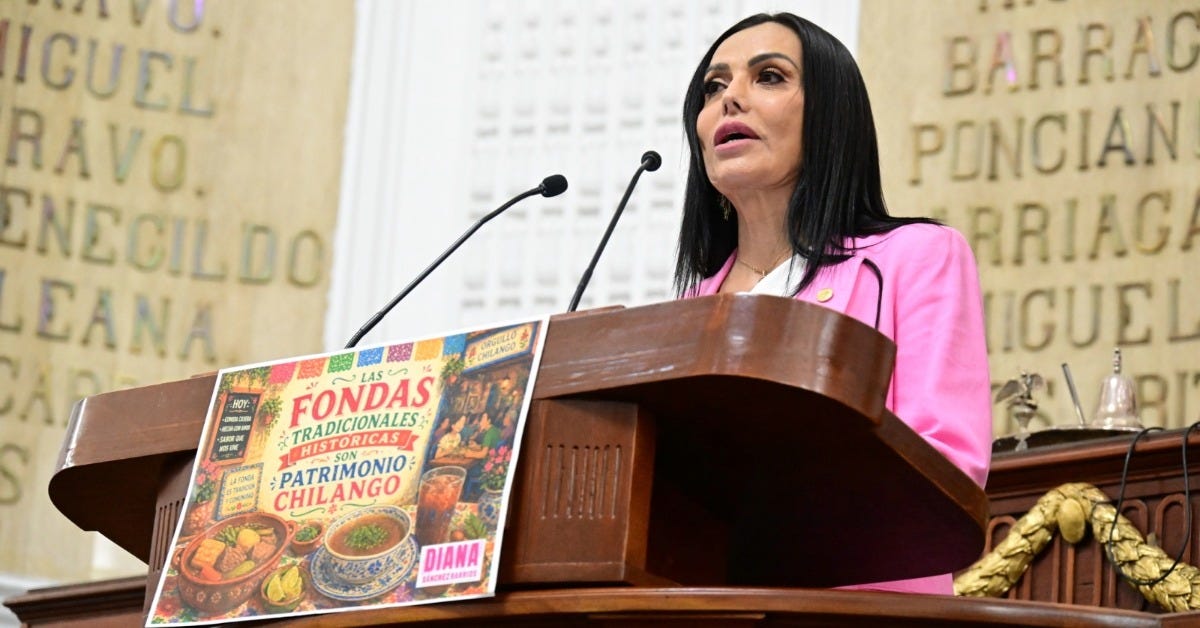
The proposal was presented in the Mexico City Congress by Deputy Diana Sánchez Barrios. It argues that fondas have historical, social, and gastronomic value. It also highlights the role of women in keeping these kitchens open and passing down family recipes, cooking techniques, and ways of organizing daily work.
The measure has not yet become law. As of April 29, 2026, it remains a proposal before the capital’s legislature. If approved, it could open the door to public policies aimed at protecting, promoting, and strengthening fondas across the city.
The proposal comes as Mexico City continues to debate how rapid urban change affects housing, neighborhood life, and small businesses. In that discussion, fondas are being framed as more than places to eat. They are described as part of the city's social fabric.
What is a fonda, and why does it matter?
For many international residents, a fonda may look like a small casual restaurant. But in Mexico City, the word carries a more specific meaning.
A fonda is usually a modest, neighborhood place that serves a daily meal, often called comida corrida or menú del día. The meal may include soup, rice or pasta, a main dish, tortillas, a drink, and sometimes dessert. The menu changes daily, and the prices are usually geared toward workers, students, and local families.
That daily rhythm is part of the point. Fondas are not built around special occasions. They serve the ordinary day. They feed office workers during lunch breaks, families without time to cook, students on limited budgets, and older residents who return to the same table year after year.
This is why the proposal treats fondas as part of living culture. Their value is not only in a dish or a recipe. It is also in the routine, the relationships, and the local knowledge that survive inside these small dining rooms.
The gentrification concern behind the proposal
The proposal situates fondas within the broader context of gentrification. In Mexico City, that word often refers to rising rents, changing businesses, and the displacement of longtime residents from central neighborhoods.
But the concern goes beyond housing. When rents rise and local customer bases change, small food businesses can also disappear. A fonda that once served a working neighborhood may struggle if the rent increases, the building is sold, or nearby residents are replaced by short-term visitors and higher-income tenants.
That pressure can change the food landscape. A neighborhood can gain cafés, bars, and restaurants aimed at visitors while losing places that served daily meals to local workers. The change may look like economic development from one angle. From another, it can mean the loss of affordable, familiar, and culturally rooted spaces.
For expats and foreign residents, this is a useful reminder. Gentrification is not only about who can afford an apartment. It is also about which businesses survive, which traditions remain visible, and who the city is being rebuilt to serve.
Women’s work at the center of the debate
The proposal also points to the work of women in sustaining fondas. Many of these spaces have depended on women as cooks, owners, managers, and keepers of recipes passed through families.
That work is often informal or undervalued. A daily menu may look simple from the customer’s side. Behind it are purchasing decisions, early preparation, recipe knowledge, food safety practices, staff coordination, and pricing choices that must survive tight margins.
By connecting fondas to heritage, the proposal seeks to give cultural value to work that is often treated as ordinary labor. It says that the people who cook daily meals for the city are also preserving memories.
This framing matters because Mexican cuisine is already recognized internationally as cultural heritage. But the CDMX proposal brings that idea down to street level. It asks whether the spaces where everyday cooking survives should also receive protection.
What heritage status could change
A heritage declaration would not automatically freeze every fonda in place. It would not solve the rent pressure on its own. It would also not guarantee that every small restaurant can remain open.
What it could do is give fondas a formal place in public policy. That could support promotion, documentation, training, business support, and preservation strategies. It could also help local authorities treat fondas as cultural assets rather than just small food businesses.
Mexico City already has a legal framework for cultural, natural, and biocultural heritage. That framework includes the idea that heritage can be material or intangible. It also gives local authorities tools to identify, protect, and promote heritage that carries social meaning.
The challenge is implementation. A declaration would need practical follow-through. Fondas, facing rent increases, regulatory costs, and changing neighborhoods, may need more than recognition. They may need business support, legal guidance, and local policies that help them remain viable.
A daily meal becomes a bigger city question
The fonda proposal lands at a moment when Mexico City is trying to balance global attention with local continuity. The city attracts tourists, digital nomads, investors, and new residents. That brings money and visibility. It also brings pressure.
For many foreigners living in Mexico, fondas are part of learning the country beyond tourism. They are places where daily Spanish is heard, seasonal dishes appear, and local eating habits become familiar. They also show how food in Mexico is tied to class, labor, and neighborhood life.
Protecting fondas would not mean rejecting change. Cities change constantly. But the proposal argues that change should not erase the everyday places that give a city its character.
In that sense, the debate is larger than food. It is about whether a city can modernize without losing the small, ordinary spaces that make it livable for the people who built its neighborhoods.
What happens next
The proposal will need to move through the legislative process before any formal declaration takes effect. Lawmakers would still need to define how fondas are identified, what counts as traditional, and what protections or support measures would follow.
Those details will matter. A broad declaration could raise awareness but have a limited impact. A more developed policy could help fondas with visibility, training, administrative support, and preservation planning.
For now, the proposal has put a familiar Mexico City institution into the public spotlight. The fonda, long treated as part of the daily background, is being discussed as a cultural space worth protecting.
That may be the most important shift. It asks residents, visitors, and officials to see the daily lunch counter not only as a place to eat, but as part of the city’s shared memory.