
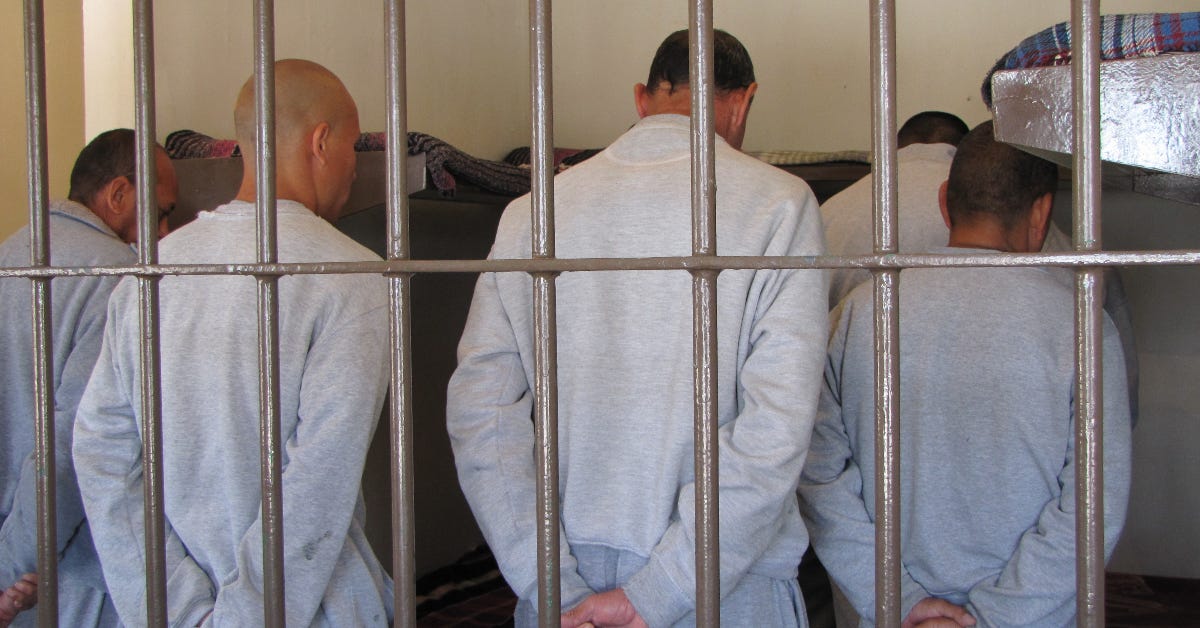
Mexico’s federal prosecutors are promising a justice system that is more useful to victims and less buried in paperwork. The harder test may be convincing people to report crimes in the first place. Mexico’s cifra negra, the large share of crimes that never reach an investigation file, has become one of the central challenges facing Ernestina Godoy’s 2026–2029 plan for the FGR.
FGR takes on Mexico’s hidden-crime reporting gap
Mexico’s federal prosecutor, Ernestina Godoy, has placed public trust at the center of the Fiscalía General de la República’s new 2026–2029 strategy, as the country continues to face a large gap in reporting of hidden crime.
That gap is known in Mexico as the cifra negra. It refers to crimes that occur but go unreported, or that never become official investigations.
The latest national victimization data shows the scale of the problem. In 2024, Mexico had an estimated 33.5 million crimes. Only 9.6% were reported. Once unreported cases and cases without an investigation file were counted together, 93.2% of crimes were left outside the justice system.
Godoy has acknowledged that the gap is even higher in some crimes, reaching more than 90% and as much as 95%. That admission gives the FGR’s new plan a clear public test. It is not enough to investigate better after a complaint is filed. People must also believe that filing a complaint is worth the time, risk, and effort.
What the FGR says it wants to change
The FGR’s plan is built around a broader institutional overhaul. It calls for a prosecutor’s office that is more evidence-based, prioritized, and results-driven. It also points to stronger coordination with local prosecutors, federal security agencies, and state authorities.
The strategy includes a new model of investigation and intelligence. The goal is to move away from isolated case files and toward investigations that identify patterns, criminal structures, and high-impact cases.
That shift could matter in crimes such as extortion, disappearances, violence against women, fuel theft, organized crime, and corruption. These are areas where victims often fear retaliation, distrust authorities, or assume nothing will happen.
But the hidden-crime gap is not only a technical problem. It is a trust problem. Many victims do not report because they believe the process will waste their time. Others fear the aggressor, lack evidence, or do not trust prosecutors.
That means the FGR’s challenge is not just to modernize its offices. It must also prove, case by case, that reporting can lead somewhere.
The numbers behind the distrust
The national victimization survey gives a plain explanation for why many people stay away from prosecutors.
Among people who did not report crimes in 2024, the most common reason was that they considered it a waste of time. Others cited distrust in authorities, long and difficult procedures, lack of proof, fear of the aggressor, or the belief that the crime was not serious enough.
Even when people did report, the results were limited. In most cases where an investigation file was opened, the complaint either remained unresolved or was still in process. Only a very small share of all crimes resulted in a positive outcome for the person who reported them.
That is the gap Godoy’s FGR must confront. A more organized prosecutor’s office may improve case handling. But public reporting will not rise unless victims see a practical reason to come forward.
A rise in reports could look like more crime
One complication is political and public perception.
If more people begin reporting crimes, official crime numbers may rise. That does not always mean more crime is happening. It can also mean more crime is finally being counted.
This is an important point for readers who follow Mexico’s security numbers. A jump in complaints can be a warning sign. It can also show that victims are more willing to use the system.
For the FGR, that creates a communication challenge. If the strategy works, it may first produce uglier statistics. The real test will be whether more reports lead to more serious investigations, more resolved cases, and better treatment for victims.
The federal role has limits
The FGR is Mexico’s federal prosecutor. It handles federal crimes and major cases involving organized crime, firearms, corruption, trafficking, federal jurisdiction, and other national-level offenses.
Most everyday crimes begin with local or state prosecutors. That includes many robberies, assaults, fraud complaints, and property crimes. For that reason, reducing the cifra negra cannot be done by the FGR alone.
The federal plan does call for more coordination with state prosecutors. That part is important. A victim usually does not think in terms of jurisdiction. They think in terms of whether someone will help them.
For foreign residents in Mexico, this distinction can be confusing. A theft, assault, fraud, or extortion complaint may involve local police, a state prosecutor, federal authorities, a consulate, or an insurance company, or several of them at once. When the process feels unclear, some victims simply give up.
That is one reason the reporting gap affects more than statistics. It shapes whether residents believe the justice system is usable.
Trust will be the hardest measure
The FGR’s plan uses the language of modernization. It speaks of intelligence, technology, professionalization, case prioritization, and better institutional control.
Those changes may help prosecutors manage heavier workloads. They may also help focus resources on crimes with broader public impact.
But Mexico’s hidden-crime gap will be reduced only if people see a different experience at the counter, online, by phone, and during follow-up. A victim who reports a crime needs clear instructions, basic respect, protection when needed, and updates that make sense.
That is harder than publishing a strategy. It requires prosecutors, police, forensic teams, and support staff to work in a way that feels real to the public.
Godoy’s 2026–2029 plan now gives the FGR a framework. The cifra negra gives it the test. If more victims report and more cases move forward, the plan will achieve measurable results. If the reporting gap remains near current levels, the reform may look better on paper than it feels in daily life.