
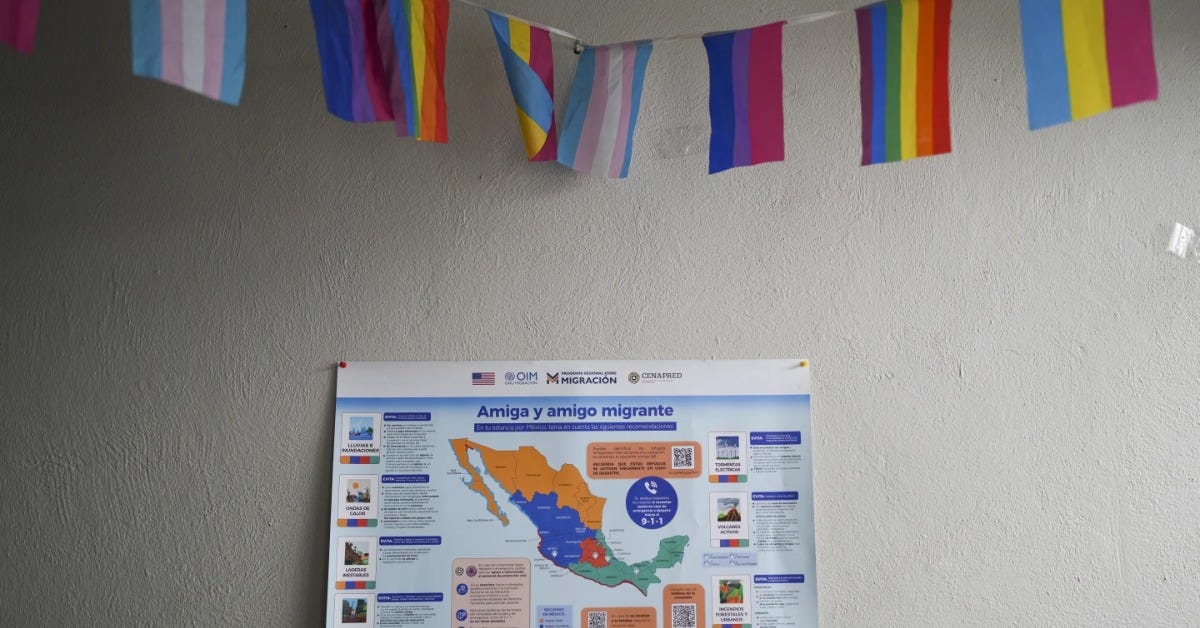
For many LGBTQ+ migrants, reaching Mexico does not end the danger. It can mark the start of a new struggle for shelter, medical care, work, and legal stability. Activists say people fleeing violence often arrive with few documents and little trust in authorities. Humanitarian groups are stepping in, but the need exceeds the available support. The problem is becoming harder to ignore as Mexico shifts from a transit country into a place where more migrants try to rebuild their lives.
LGBTQ+ migrants face added risks in Mexico
LGBTQ+ migrants in Mexico are facing violence, discrimination, and major barriers to basic services, according to human rights activists working with people in transit and in shelters.
Activist Kenya Cuevas said migrants from the LGBTQ+ population often struggle to access health care, jobs, shelter, and legal regularization while trying to stabilize their lives in Mexico. She also pointed to humanitarian groups, including Las Patronas in Veracruz, as part of the support network helping migrants who are often left outside formal systems.
The issue is not limited to a single city or migration route. It touches southern border towns, central Mexico, Veracruz, the capital, and northern cities where migrants seek work, asylum, or a safer place to live.
For many international readers, the story helps explain why migration in Mexico is not only a border issue. It is also a question of public health, civil rights, local services, and community support.
Why LGBTQ+ migrants are more vulnerable
Many migrants leave their countries because of poverty, insecurity, or political instability. LGBTQ+ migrants can face those same pressures, but often with another layer of risk.
Some leave after threats from relatives, gangs, employers, or local authorities. Others flee because their identity makes housing, education, or work unsafe. Trans people can face particular danger, especially when official documents do not match their gender identity or when shelters are not prepared to protect them.
Once in Mexico, those risks can continue. A person may be targeted because they are foreign, because they are poor, because they lack documents, or because they are visibly LGBTQ+. When those factors overlap, the danger grows.
Discrimination can also make people avoid authorities. That matters because many migrants need official help to request refuge, report a crime, access health care, or replace documents. If they fear mistreatment, they may stay silent and remain exposed to abuse.
Services exist, but access is uneven
Mexico has public institutions for migration and refugee protection, but the path can be difficult for people without money, documents, or stable housing.
A migrant seeking refuge must often navigate interviews, paperwork, and waiting periods. During that time, they still need food, medical care, a safe place to sleep, and a way to earn money. For LGBTQ+ migrants, each step can carry added barriers.
Shelters may not always be safe for same-sex couples, trans women, or gender-nonconforming people. Health care may be delayed due to paperwork, a lack of information, or discrimination. Finding work can be hard when a person has no local references, no stable address, or no documents that employers understand.
That is why community organizations have become essential. Some provide temporary housing. Others help with legal advice, psychological support, job placement, HIV care navigation, or referrals to safer shelters.
But those groups cannot replace a functioning public system. They often depend on donations, grants, and volunteers. When funding drops, the support available to migrants can shrink quickly.
Veracruz and the role of Las Patronas
The mention of Las Patronas is important because the group has long been associated with humanitarian aid to migrants passing through Veracruz.
For decades, Las Patronas became known for giving food and water to migrants traveling north through Mexico. Their work later expanded into broader support, including aid for people facing illness, legal uncertainty, or emergency needs.
In this case, Cuevas pointed to Las Patronas as one of the groups helping LGBTQ+ migrants. That detail matters because it shows how older migrant-aid networks are adapting to changing needs.
Migration through Mexico is no longer only about people moving quickly toward the United States. More migrants are staying longer in Mexican cities, either by choice or because border policies, asylum delays, or safety concerns leave them with few options.
That shift creates pressure on local shelters, clinics, and civil organizations. It also forces communities to confront questions that were once treated as distant or temporary.
Legal status can decide access to daily life
For LGBTQ+ migrants, legal regularization is often the difference between survival and stability.
Without legal status, a person may struggle to rent a room, open a bank account, access formal work, or move safely between cities. They may also be more vulnerable to extortion or abuse because they fear reporting crimes.
Legal status does not solve everything. A person can still face racism, homophobia, transphobia, or xenophobia after receiving documents. But regularization can make it easier to work, study, receive medical care, and plan beyond the next emergency.
This is why delays in asylum and migration procedures matter. A delayed case can leave a person stuck in a shelter, unable to work formally or afraid to travel. For someone already fleeing violence, that uncertainty can deepen trauma and make recovery harder.
Mexico is becoming more than a transit country
Mexico has become both a transit route and a destination for migrants. Some people still hope to reach the United States. Others decide to remain in Mexico because crossing north has become more difficult or because they find community support here.
That shift changes the responsibility of Mexican institutions. If more migrants stay, the country needs stronger systems for integration, not only enforcement.
For LGBTQ+ migrants, integration means more than paperwork. It means safe shelters, inclusive health care, work free from discrimination, and legal processes that recognize the specific risks tied to sexual orientation and gender identity.
It also means training for police, migration officials, health workers, and shelter staff. A policy can look fair on paper but fail in practice if the first person a migrant meets responds with mockery, suspicion, or abuse.
What to watch next
The pressure on migrant-aid groups is likely to continue as Mexico receives people fleeing violence, poverty, and discrimination across the region.
The main question is whether public services can keep pace with reality on the ground. Civil groups are already doing much of the emergency work. But long-term protection depends on better coordination among government agencies, shelters, health providers, and local communities.
For foreign residents in Mexico, this issue may feel distant until it appears locally through shelters, clinics, church groups, labor markets, or public debates over safety and migration. The people affected are not an abstract group. They are workers, asylum seekers, patients, neighbors, and people trying to live without fear.
The warning from activists is direct: LGBTQ+ migrants are not only crossing borders. They are crossing systems that often were not built with them in mind.