
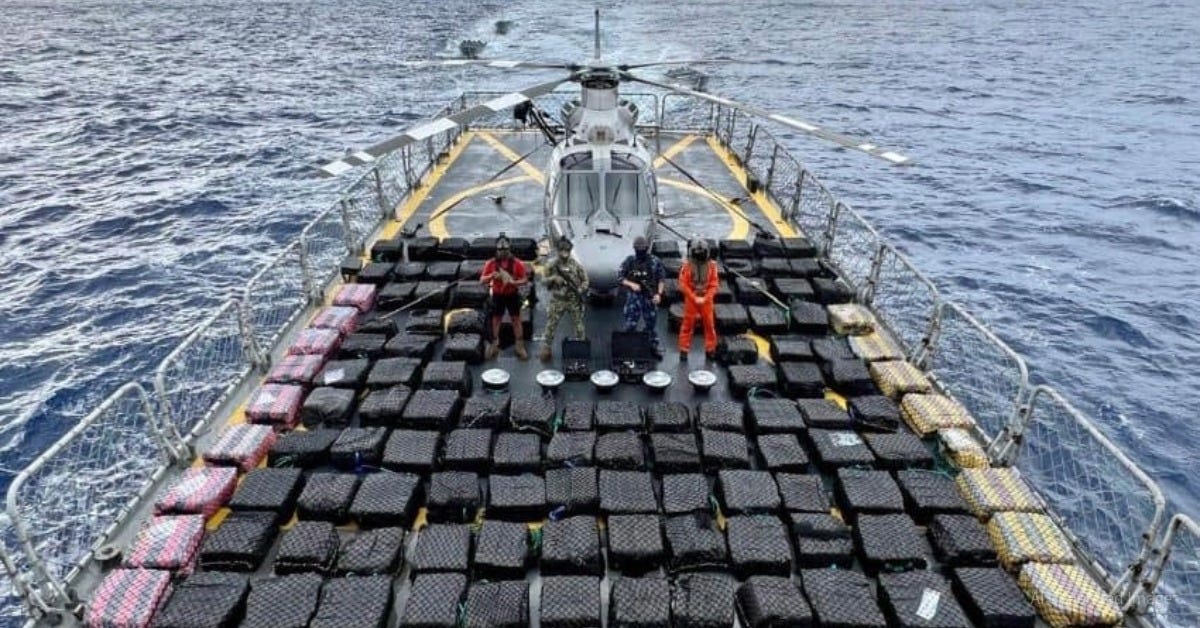
Mexico’s Navy and the U.S. Navy have made maritime drug interdiction a central security channel, with federal figures showing major seizures since October 2024.
The operations focus on Mexico’s Pacific, Gulf, and Caribbean routes, where criminal groups move cocaine, synthetic-drug chemicals, fuel, and people through coastal corridors far from public view.
Mexico’s Navy, known as Semar, says the current security effort has led to the detention of 19,680 people allegedly tied to illegal activity. Authorities also reported more than 74 tons of cocaine, nearly 119 tons of methamphetamine, more than 24 tons of marijuana, more than 1.5 tons of fentanyl, and more than 1,000 tons of chemical substances and precursors seized.
Naval cooperation grows between Mexico and the U.S.
The bilateral work follows high-level meetings held from June 3 to 5 in Washington, where Navy Secretary Adm. Raymundo Pedro Morales Ángeles met with U.S. naval and Coast Guard commanders.
Semar said the relationship is based on “respect for sovereignty, cooperation without subordination, shared responsibility and mutual trust.”
The meetings included U.S. Navy Adm. James W. Kilby and U.S. Coast Guard Adm. Kevin E. Lunday. Officials discussed maritime security, search and rescue, port protection, cybersecurity, training, and cooperation against transnational organized crime.
The North American Maritime Security Initiative, a trilateral mechanism active since 2008, remains part of the strategy. It is used to coordinate intelligence and operations while each country keeps control of its own waters.
Pacific routes remain a major pressure point
At sea, the numbers are especially large. Authorities reported more than 71 tons of cocaine seized offshore, along with 254 arrests, 74 vessels, three low-profile boats, 193 motors, and more than 153,000 liters of fuel.
That offshore work connects to a broader campaign on land. Semar also reported that 114 clandestine laboratories were dismantled, more than 810 tons of chemical substances and precursors were neutralized, and more than 20 million liters of stolen fuel were seized.
The U.S. ambassador to Mexico, Ronald Johnson, said in a security update that “maritime drug trafficking to the United States has decreased by more than 95 percent.”
The strategy is backed by 79,204 naval personnel, 130 ships, 121 smaller vessels, 45 helicopters, 47 fixed-wing aircraft, nine unmanned aerial systems, and 99 drone or anti-drone systems, according to security figures reviewed this week.
For Puerto Vallarta and other Pacific ports, the issue is less about beach-level security and more about federal patrol patterns, port surveillance, and offshore trafficking routes. These operations usually happen far from tourist areas, but they shape how Mexico monitors the same Pacific corridor used by commercial ships, fishing vessels, and smugglers.
The same pattern was visible earlier this year when Mexican authorities and the U.S. Coast Guard intercepted more than 4.5 tons of cocaine in the Pacific. In April, Mexico’s Navy also said it had already seized more than 11 tons of cocaine at sea in 2026.
The latest figures show maritime enforcement has become one of Mexico’s most visible pressure points against transnational trafficking networks, even as the broader security relationship with Washington remains tied to migration, fentanyl, arms trafficking, and border policy.