
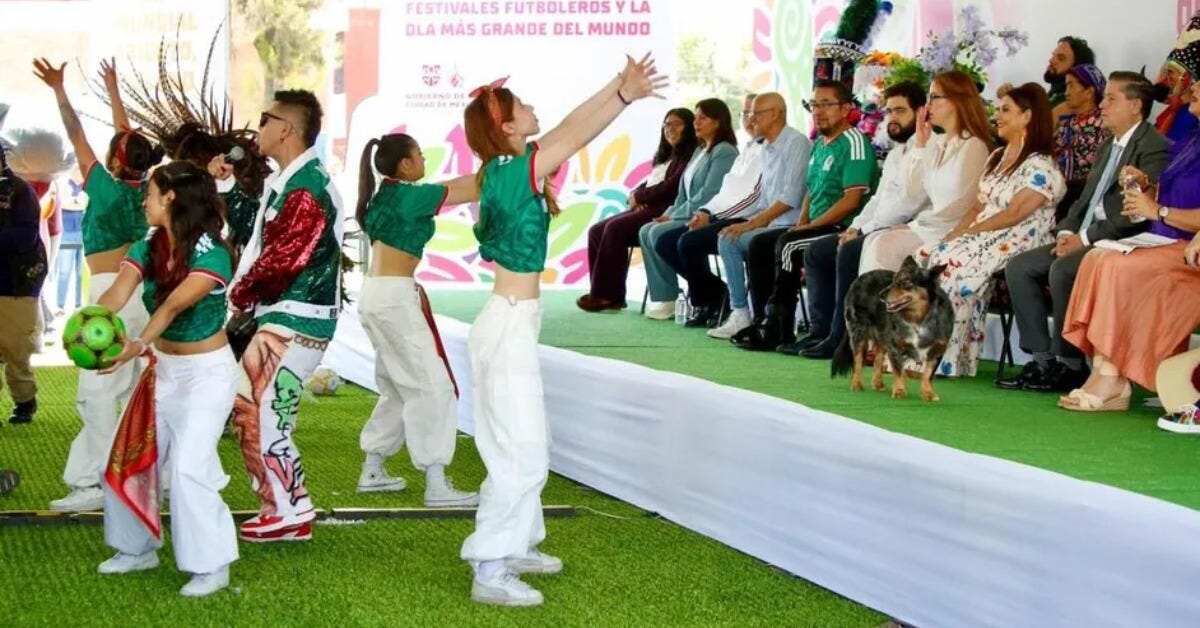
Mexico City is preparing for the 2026 World Cup with more than stadium matches. City officials announced 18 free public fan festivals across the capital, creating spaces where residents and visitors can watch games on giant screens and take part in cultural, sports, and food events. The plan includes a main FIFA Fan Fest in the Zócalo and neighborhood festivals across the city, raising questions about crowds, mobility, and how Mexico will handle one of its largest public events in years.
Mexico City plans a World Cup outside the stadium
Mexico City officials announced 18 free World Cup fan festivals across the capital, part of a wider plan to bring the 2026 tournament into public spaces beyond the stadium.
The festivals will include giant screens, cultural programming, sports activities, food events, and family-centered entertainment. Seven sites are expected to operate during the full 39-day tournament, while 11 others will activate for Mexico matches and other high-interest games.
The announcement places public access at the center of the city’s World Cup plans. Tickets for matches are limited and expensive, and many residents will not enter the stadium. The fan festivals are meant to give locals and visitors a free way to follow the tournament together.
Mexico City will also host the main FIFA Fan Fest in the Zócalo, the capital’s central square. That site is expected to become one of the largest public gathering points during the tournament.
What the festivals will include
The city’s plan calls for a mix of match screenings and public programming. Officials described a festival model with concerts, sports contests, public art, traditional games, workshops, and food fairs.
The food component is expected to highlight Mexican street food, corn-based dishes, ice cream fairs, and products from local and Indigenous communities. The festivals are also expected to be alcohol-free, making them more focused on families and community gatherings than nightlife.
Named sites include Plaza Garibaldi, Parque Tezozómoc, the Central de Abasto, and Bosque de Tláhuac. The full network is designed to spread crowds across the city, rather than concentrating everyone in the Zócalo or near the stadium.
That matters in a city where traffic, transit pressure, and crowd control are daily concerns. A distributed fan-festival model could help reduce pressure on the historic center, while still giving visitors reasons to explore different parts of the capital.
Mexico City’s bigger World Cup role
The 2026 World Cup will be the first held across three countries: Mexico, the United States, and Canada. It will also be the first men’s World Cup with 48 teams.
Mexico City is one of 16 host cities and one of three in Mexico, along with Guadalajara and Monterrey. The capital will host five matches at Mexico City Stadium, the World Cup name for the stadium long known as Estadio Azteca.
The opening match is scheduled for June 11, 2026, when Mexico faces South Africa. That date will place Mexico City at the center of global attention from the first day of the tournament.
For international residents and visitors, the fan festivals may become the most practical way to experience the event. They offer public viewing without the cost of match tickets and without the need to travel between host cities.
A public event with tourism impact
The festivals are also part of a broader tourism strategy. World Cup visitors are expected to arrive in Mexico through several major airports, then move between host cities and tourist destinations before, during, and after matches.
For Mexico City, the challenge is not just hosting games. The city must also manage transportation, security, hotel demand, public celebrations, and local business activity. Fan festivals can support that effort by creating organized spaces where crowds can gather.
The approach may also help smaller vendors, artisans, and food producers reach World Cup crowds. If managed well, the events could spread spending beyond hotels, stadium areas, and established tourist corridors.
Still, large public events require clear planning. Visitors will need reliable information on schedules, transit, security rules, restricted items, and neighborhood access. Residents will also want to know how their daily routines may be affected by road closures and crowd-control measures.
The countdown has moved into public space
The announcement came as Mexico City continues to promote public activities leading up to the tournament. Officials have also called for a mass “wave” event on Paseo de la Reforma as part of the city’s World Cup buildup.
These pre-tournament events show how the capital is using the World Cup as more than a sports schedule. The city is framing it as a public celebration tied to culture, neighborhoods, and civic space.
For foreigners living in Mexico, the plan is worth watching even if they do not plan to attend a match. The World Cup will affect travel, hotels, airports, public transit, and crowd patterns across several Mexican cities.
Mexico City’s free fan festivals are one early look at how the country is preparing for that pressure. They also show a clear message from local officials: the 2026 World Cup will not be limited to those with stadium tickets.
Mexico’s World Cup Welcome Plan Starts at the Border