
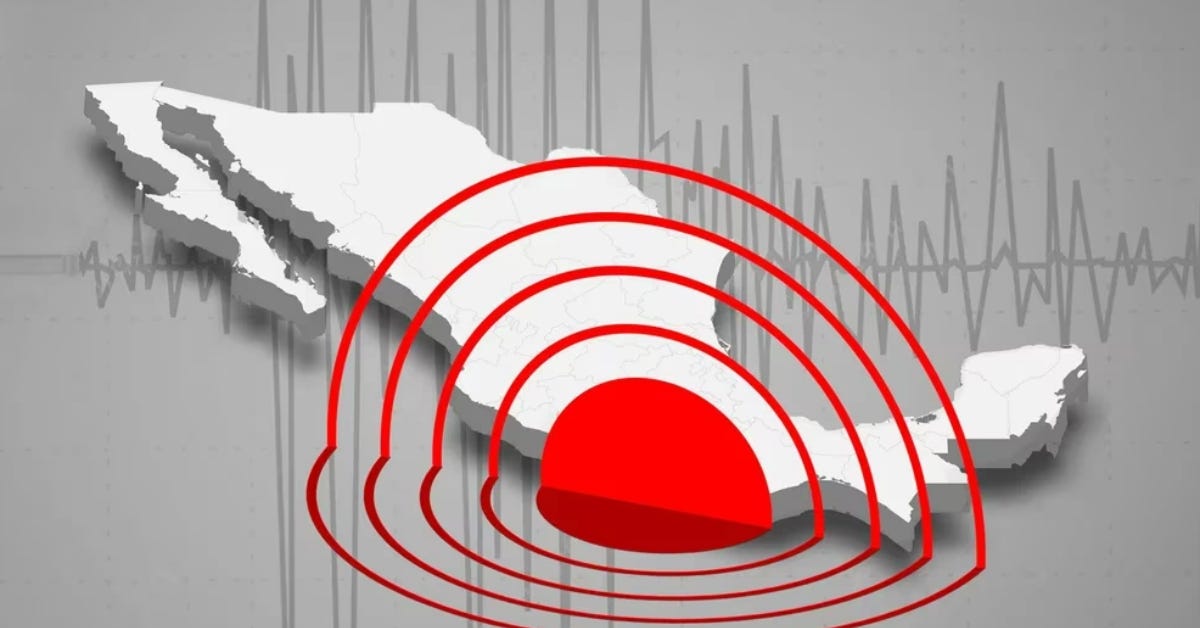
A Monday morning earthquake near Mexico’s southern Pacific coast set off Mexico City’s seismic alert and sent people out of buildings as emergency protocols began. The preliminary report placed the epicenter near Pinotepa Nacional, Oaxaca, an area familiar with strong seismic activity. Early reports did not confirm serious damage, but authorities continued inspections. For many foreign residents, the event is also a reminder of how Mexico’s alert system works, what it does well, and what to do after the sirens stop.
Magnitude 6 Oaxaca Quake Triggers Mexico City Alert
A preliminary magnitude 6 earthquake struck near Pinotepa Nacional, Oaxaca, on Monday morning, prompting the activation of Mexico City’s seismic alert and the preventive evacuation of buildings in parts of the capital.
The National Seismological Service reported the quake at 09:19:26 a.m. Central Mexico time. The preliminary epicenter was placed 14 kilometers northwest of Pinotepa Nacional, in Oaxaca’s Costa region, at a depth of 10 kilometers.
The early coordinates were listed as latitude 16.44 and longitude -98.13. Those details may still be adjusted, as Mexico’s seismic agency often revises magnitude, depth, and location after further analysis.
No serious damage had been confirmed in the first public reports on Monday morning. Civil protection authorities were carrying out inspections in areas where the earthquake was felt.
What happened Monday morning
The quake occurred as many people were beginning the workday. In Mexico City, the seismic alert sounded, triggering the standard response in offices, schools, apartment buildings, government sites, and public spaces.
Many residents left buildings and moved toward designated meeting points. Emergency services also began the usual post-alert checks, including patrols and reviews of possible structural damage.
The alert was activated because the earthquake was detected in a region that can send seismic waves toward central Mexico. The system is designed to give people seconds of warning before stronger shaking arrives, though the amount of time varies by distance, depth, and the type of quake.
For foreign residents, this can be one of the more unsettling parts of living in Mexico. The siren is loud, urgent, and often heard before a person feels anything. That is normal. The alert is meant to move people first and explain later.
Why Oaxaca earthquakes can be felt far away
Oaxaca is one of Mexico’s most active seismic regions. The state sits near the boundary where the Cocos Plate moves beneath the North American Plate, a process that produces frequent earthquakes along the Pacific coast.
Pinotepa Nacional is in the Costa region of Oaxaca, near Guerrero, and a stretch of Mexico where earthquakes are common. A quake there can be felt across several states, depending on depth, magnitude, and local soil conditions.
Mexico City is especially sensitive to distant earthquakes because parts of the capital were built on the soft sediments of the former lakebed. Those soils can amplify shaking from quakes that begin hundreds of kilometers away.
That does not mean every quake near Oaxaca will cause damage in the capital. It does mean people in Mexico City often receive alerts for earthquakes that may feel mild, moderate, or sometimes barely noticeable in their neighborhood.
The difference between the SSN and the alert system
The Servicio Sismológico Nacional, known as the SSN, reports earthquake data. It does not operate Mexico’s public seismic alert.
The alert system is operated by the Sistema de Alerta Sísmica Mexicano, or SASMEX, through the Centro de Instrumentación y Registro Sísmico. Its sensors detect strong earthquakes in key seismic zones and estimate whether they could affect cities connected to the alert network.
That distinction matters. The SSN confirms and updates earthquake information after an event. SASMEX is meant to warn people before shaking arrives, when possible.
In practical terms, residents should use both systems. When the siren sounds, follow safety procedures immediately. Afterward, check SSN and civil protection updates for confirmed details.
What residents should do after a quake
After an earthquake, the most important step is to stay away from damaged areas and follow local civil protection instructions. People should avoid rushing back into a building until it is safe to return.
At home, residents should check for obvious damage, gas leaks, electrical issues, broken glass, and fallen objects. If there is a smell of gas, sparks, cracks in structural elements, or signs of serious damage, the safest step is to leave the property and report it to authorities.
People should also expect possible aftershocks. These are common after a moderate or strong quake and can occur minutes, hours, or days later. Most are smaller than the main event, but they can still be dangerous around weakened structures.
For expats and visitors, it is also worth learning the local evacuation route in any building where you spend time. Many apartment towers, hotels, offices, and malls in Mexico have posted routes and meeting points. Knowing them before the siren sounds makes the response less stressful.
A reminder before Mexico’s earthquake drill
Monday’s quake came just days before Mexico’s scheduled national earthquake drill on May 6, when authorities are expected to test emergency procedures in several parts of the country.
For residents in Puerto Vallarta and other coastal areas, the drill is especially important because Jalisco authorities are also preparing for a scenario involving a strong earthquake and possible tsunami risk.
The timing is a reminder that earthquake preparation is not only for Mexico City or Oaxaca. Much of western and southern Mexico sits in seismic territory, including areas popular with foreign residents and tourists.
A basic emergency plan should include a meeting point, copies of key documents, a phone battery backup, drinking water, a flashlight, medication, and a clear plan for pets. People living in condos or apartment towers should also know who manages building inspections after an earthquake.
No major damage confirmed in early reports
As of Monday morning, authorities had not confirmed any serious damage or casualties from the Oaxaca quake. Monitoring continued in areas where the movement was felt.
That first assessment can change. Damage reports often take longer to verify, especially in rural communities near an epicenter. Roads, schools, clinics, churches, and older buildings are usually among the first sites checked after a significant quake.
Residents should continue to rely on official updates and avoid sharing unverified images, old videos, or rumors. During earthquakes, misinformation often spreads faster than confirmed information.