
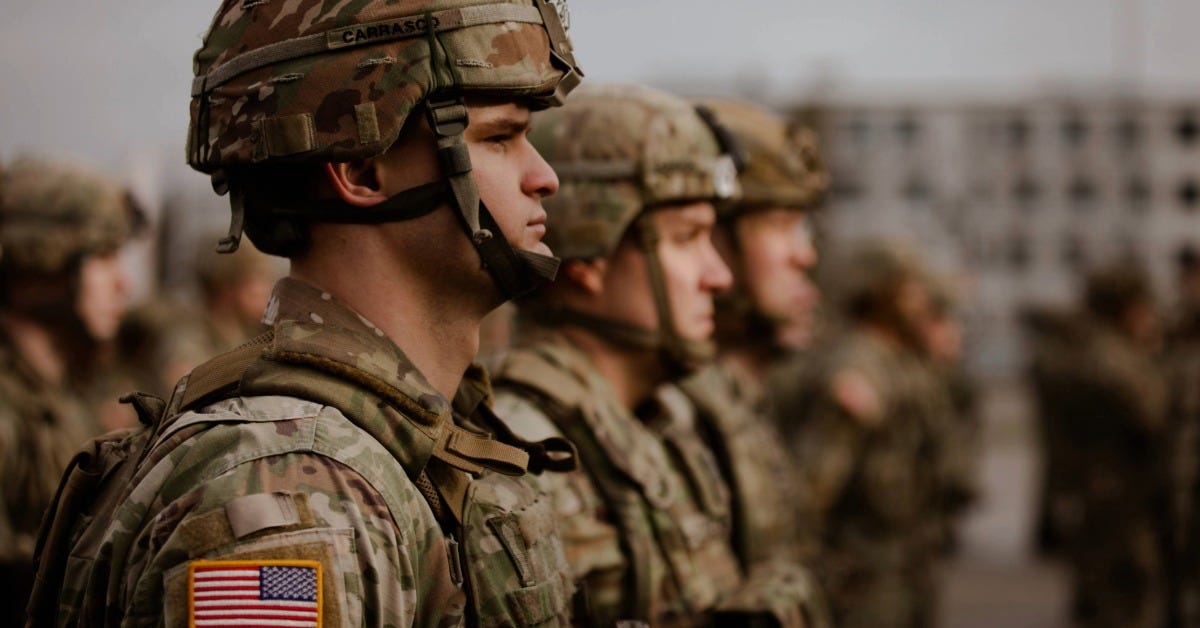
Mexico’s Senate has approved the entry of 12 armed U.S. military personnel for a five-month training exercise with Mexican special forces. The decision comes at a sensitive moment in bilateral relations, as Washington has increased pressure over organized crime and Mexican officials continue to stress sovereignty. For foreign residents, the vote offers a window into how Mexico handles security cooperation with the United States without formally ceding control over operations inside the country.
Armed U.S. Troops in Mexico
Mexico’s Senate approved the entry of 12 armed U.S. military personnel into the country for a special-forces training program with Mexican troops, adding another layer to the ongoing security relationship between Mexico and the United States.
The authorization allows the U.S. personnel to be in Mexico from July 15 to December 15, 2026. They are expected to participate in a training event focused on improving the capabilities of Mexican special-forces units.
The approval came in response to a request from President Claudia Sheinbaum and was handled by the Senate under Mexico’s constitutional rules governing foreign troops. In Mexico, the president cannot simply allow foreign military personnel to enter the country for these purposes without legislative authorization.
The timing gave the vote added political weight. The Senate session also unfolded as U.S. authorities accused Sinaloa Governor Rubén Rocha Moya and other current or former Mexican officials of alleged links to organized crime. Mexican officials have said U.S. authorities have not provided sufficient evidence through the formal extradition process.
What the Senate approved
The approved request permits the entry of 12 members of the U.S. military, including those linked to the 7th Special Forces Group and U.S. Special Operations Command North.
The personnel will be allowed to carry weapons and equipment tied to the training exercise. Their arrival is scheduled for July 15, 2026, aboard a U.S. Air Force aircraft. Their departure is scheduled for December 15, 2026.
The training event is identified as SOF3, described as a program to improve the capabilities of special-forces units. Its stated purpose is to strengthen technical and tactical skills, establish common procedures, and improve coordination in addressing security challenges.
The activities are expected to take place at several military sites in the State of Mexico. These include the Special Forces Training Center in Temamatla, the Regional Training Center in San Miguel de los Jagüeyes, and the military air zone at Santa Lucía.
The authorization does not describe a combat operation. It frames the presence as a temporary training mission under Mexican approval, Mexican facilities, and a defined time period.
The legal route matters in Mexico
The vote is important because Mexico has strict rules for foreign troops on its soil.
Under Article 76 of the Mexican Constitution, the Senate has exclusive authority to authorize the president to allow foreign troops to pass through national territory. That rule reflects Mexico’s long-standing sensitivity over sovereignty and foreign military involvement.
This is why these requests are handled through formal Senate approval. Even when the number of foreign personnel is small, the constitutional process is part of the story.
The approval also helps distinguish between authorized military cooperation and unauthorized foreign security activity. That difference has become more visible in recent months, especially after controversies involving U.S. security personnel and military aircraft linked to Mexico-related operations.
For readers living in Mexico, the basic point is this: the approval does not mean U.S. troops are being deployed across Mexico. It means a specific group has been granted permission to enter a defined training program at named military facilities.
A sensitive moment for Mexico and the United States
The Senate vote came amid strained security relations between Mexico and the United States.
U.S. prosecutors have accused Sinaloa Governor Rubén Rocha Moya and nine other current or former officials of drug-trafficking and weapons-related offenses. The accusations involve alleged cooperation with the Sinaloa Cartel. Rocha has denied the allegations.
Mexico’s Foreign Relations Ministry has said U.S. authorities submitted requests related to detention and extradition, but the material received did not include sufficient evidence. The Mexican government has said the matter was sent to the Attorney General’s Office for review under Mexican law.
That separate case made the Senate session more politically charged. It also placed the military training approval inside a broader debate over how far U.S. pressure on Mexico may go.
Security cooperation between the two countries is common. But it is often politically delicate. Mexico depends on intelligence sharing, training, and coordination with the United States on organized crime, weapons trafficking, migration, and border security. At the same time, Mexican governments are careful to avoid the appearance that Washington is directing security policy inside Mexico.
Sheinbaum’s government has repeatedly emphasized sovereignty, while also keeping cooperation channels open with U.S. agencies and military commands.
Not the only recent U.S. military approval
The 12-person authorization is separate from other recent Senate approvals involving U.S. military personnel.
In late April, the Senate also approved the entry of larger U.S. military groups for other exercises, including amphibious and special operations training. Those approvals involved different dates, units, and locations.
That distinction matters because public discussion often conflates these approvals. The 12-person case is a specific authorization for a five-month special-forces training event in the State of Mexico. Other approvals involve different training missions and separate timelines.
Mexico has approved similar training entries in previous years. These votes are not new. What is different now is the political climate around U.S.-Mexico security relations.
Recent disputes over U.S. agents, aircraft, extradition pressure, and cartel-related accusations have made routine security cooperation more closely watched.
What the training is meant to do
The stated goal of the training is to strengthen the capabilities of Mexican special-forces units.
That generally means work on tactical procedures, coordination, operational planning, and specialized skills. The request describes the exercise as a way to improve compatibility between forces and develop shared procedures for high-precision operations.
The wording is careful. It points to training and capacity-building rather than direct U.S. operational control.
The participation of U.S. special operations personnel also reflects the type of security challenges both governments say they face. Organized crime groups operate across borders, move weapons and drugs through complex routes, and use financial and logistical networks that reach beyond Mexico.
For Mexico, training with U.S. units can provide access to specialized methods and equipment knowledge. For the United States, cooperation supports its own security interests, especially on narcotics, weapons, and border-linked threats.
Still, cooperation with foreign military personnel remains politically sensitive in Mexico. Any armed presence, even a temporary and authorized one, can raise questions about oversight and limits.
What this does not mean
The Senate approval does not authorize U.S. troops to conduct independent operations in Mexico.
It does not establish a permanent U.S. base. It does not give U.S. personnel open-ended authority to move around the country. It does not replace Mexican command over Mexican military facilities.
The permission is tied to a training event, a limited number of personnel, specific dates, and named locations.
That does not remove the political debate. But it does define the legal scope of what was approved.
For foreign residents following Mexico’s security news, this is a useful distinction. Mexico and the United States often cooperate closely, but Mexico’s legal system requires formal authorization when foreign troops are involved.
The broader security debate
Mexico’s security relationship with the United States is entering another difficult phase.
Washington is using stronger language and legal tools against alleged cartel networks. Mexico is responding by defending its legal process and demanding evidence through formal channels. Both governments still need cooperation, but each is managing domestic political pressure.
The Senate vote fits into that balancing act.
On one side, Mexico is allowing a small group of armed U.S. special operations personnel to enter for training. On the other hand, it is doing so through a constitutional process that reinforces Mexican control over the terms.
That balance is likely to remain central in the months ahead. As cartel violence, fentanyl trafficking, weapons smuggling, and extradition disputes continue, the question will not be whether Mexico and the United States cooperate. They already do.
The question is how visible that cooperation becomes, how much oversight is attached to it, and how both governments explain it to the public.
For now, the Senate has cleared the way for the 12 U.S. personnel to arrive in July. Their presence will be temporary, armed, and officially approved. It will also take place under a political spotlight that is unlikely to fade soon.
Mexico’s Senate Grants Approval for US Military Training in Chihuahua