
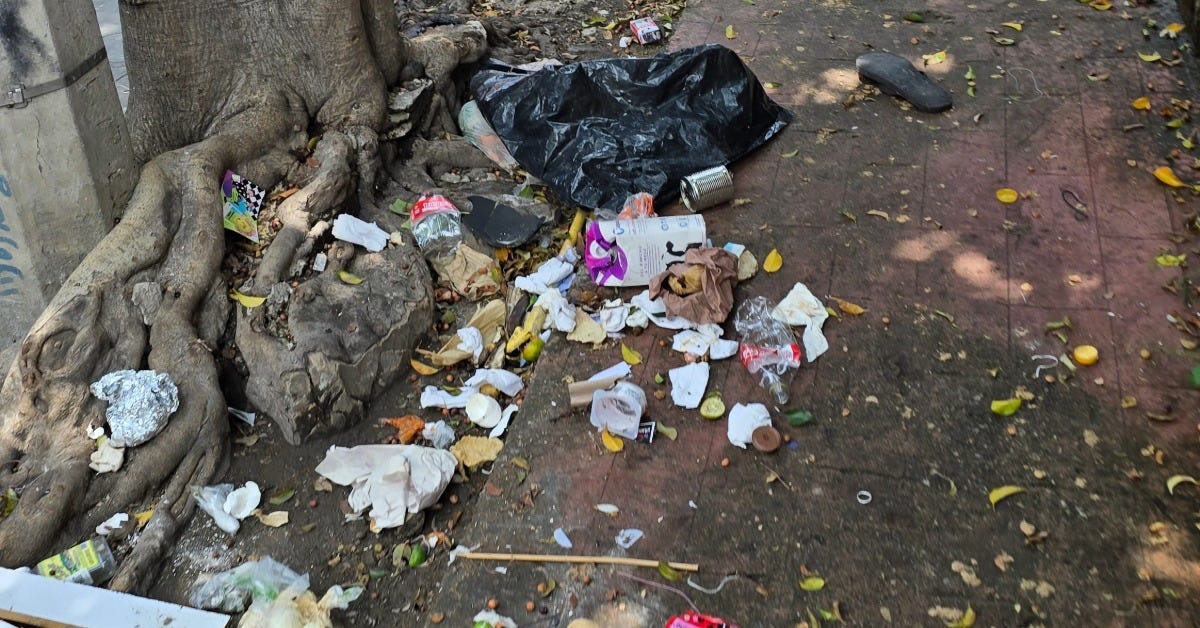
Mexico’s environment ministry is putting the private sector at the center of its new sustainability agenda. The plan includes circular-economy parks, updated environmental rules, and a larger push to turn waste into economic value. The message comes as Mexico faces growing pressure from trash, plastics, construction debris, water stress, forest loss, and contaminated rivers. For residents, businesses, and communities, the question is how quickly these plans can move from policy language to visible results.
Semarnat puts business at center of environmental plan
Mexico’s Environment Secretary, Alicia Bárcena, told business leaders that the private sector will be central to the country’s environmental sustainability agenda as the federal government prepares new rules on waste, production, recycling, and climate policy.
The message was delivered during a meeting with corporate leaders from Empresas Globales. Bárcena presented Mexico’s new circular economy framework as part of a wider effort to change how companies design, produce, recover, and reuse materials.
The policy comes as Mexico faces heavy environmental pressures. Federal officials cited large volumes of daily waste, millions of tons of plastic, construction debris, electronic waste, used tires, forest loss, water stress, river contamination, and greenhouse gas emissions from major economic sectors.
For people living in Mexico, the discussion is not only about national climate targets. It also touches daily life. Waste collection, water quality, beach pollution, development pressure, and local infrastructure are all tied to how Mexico manages growth.
What circular economy means in practice
A circular economy is different from the traditional “use it and throw it away” model. The idea is to keep materials in use longer, recover value from waste, and reduce pressure on landfills, rivers, beaches, and natural areas.
In Mexico’s case, the new federal law seeks to make that shift part of public policy. It focuses on reuse, recycling, recovery, and producer responsibility. That means companies may face clearer duties over what happens to products and packaging after consumers are finished with them.
This is where the private sector becomes important. The government can write rules and set targets, but many of the materials that become waste begin in private supply chains. Packaging, electronics, textiles, tires, building materials, and consumer goods are designed, sold, transported, and recovered through business networks.
The law is also meant to create economic activity from materials that are now treated mostly as trash. That could include recycled plastics, construction debris, tires, textiles, organic waste, and other materials that can be processed into new products.
Four circular economy parks are planned
Semarnat said Mexico plans to develop four circular-economy parks, where industries can work with recycled materials to turn waste into usable products.
These parks are intended to help move recycling beyond small-scale collection and into industrial production. The goal is not only to reduce waste but to build new supply chains around recovered materials.
That will require investment, technology, regulation, and local coordination. It will also require markets for the products made from recycled materials. Without buyers, waste recovery can remain a public-service burden rather than become an economic system.
The government has already discussed circular-economy projects in several areas, including parks tied to recycling and the use of waste materials in production. The challenge will be whether these projects can operate at the scale Mexico needs.
The numbers behind the policy
Mexico’s waste problem is large. Federal officials cited about 139,000 tons of waste per day, along with millions of tons of plastics, construction and demolition waste, electronic waste, and more than 300 million used tires nationwide.
Those figures help explain why Mexico is moving toward stronger producer responsibility. If companies help recover and reuse what they put into the market, the burden on municipalities could be reduced.
Municipal governments often carry the front-line responsibility for trash collection and disposal. Many local governments lack the budget, equipment, or landfill capacity to manage growing waste volumes.
That problem is visible in many tourist and expat-heavy areas. Coastal cities face pressure from visitors, new housing, restaurants, construction, packaging, and seasonal population swings. When waste systems fall behind, the impact can show up in streets, rivers, beaches, and drainage systems.
Environmental rules are also being updated
Bárcena also pointed to an update of Mexico’s General Law of Ecological Balance and Environmental Protection, a core environmental law that has not had a major modernization in decades.
The update is expected to include newer concepts such as circular economy, environmental restoration, and nature-based solutions. These ideas reflect how environmental regulation has changed since the 1990s.
Older rules often focused on permits, pollution controls, and protected areas. Newer frameworks tend to look at entire systems, including supply chains, land use, water, climate risk, biodiversity, and waste recovery.
For businesses, this could mean more detailed environmental obligations. For communities, it could mean stronger tools to address pollution and poor planning. The real test will be enforcement.
Mexico has many environmental rules on paper. The recurring problem is whether agencies have enough budget, staff, monitoring capacity, and political support to apply them evenly.
Climate policy is part of the same agenda
Semarnat also linked the discussion to Mexico’s NDC 3.0, the country’s updated climate pledge under the Paris Agreement.
The NDC is meant to guide emissions reductions, adaptation, loss and damage, financing, and implementation. In plain terms, it is Mexico’s roadmap for cutting climate pollution and preparing for climate impacts.
This matters for industry because emissions are tied to transport, electricity generation, manufacturing, agriculture, and waste. If Mexico wants to reduce emissions, businesses will need to change how energy, materials, logistics, and production are managed.
The government is also seeking ways to turn environmental priorities into projects that can attract investment. That includes support from financial institutions and coordination with Mexico’s finance authorities.
Water and forest pressures remain central
The broader environmental picture is not limited to trash. Officials also cited the loss of 4.4 million hectares of forests and jungles over the past 24 years, water availability problems in part of the country’s basins, and contamination in a large share of rivers.
These issues connect directly to development. Forest loss can be driven by agriculture, illegal logging, urban growth, infrastructure, and land-use changes. Water stress can worsen when cities grow faster than their water systems.
River contamination often reflects untreated wastewater, industrial discharge, agricultural runoff, and weak enforcement. These problems are national, but they are felt locally.
For foreign residents, this can show up in practical ways. It can affect water supply, beach conditions, property development, public health, tourism, and the quality of life in growing communities.
The challenge now is implementation
Mexico’s environmental agenda is becoming more ambitious. The new circular-economy law, planned industrial parks, climate targets, and regulatory updates all point in the same direction.
The harder question is implementation. Circular economy requires more than recycling campaigns. It needs collection systems, reliable data, private investment, public enforcement, local planning, and consumer participation.
It also needs transparency. Communities will need to know where parks are built, which companies participate, what materials are processed, and whether pollution is actually reduced.
For now, Semarnat is sending a clear signal to business: environmental sustainability will not be treated only as a government program. It is being framed as part of Mexico’s economic future.
Whether that becomes visible in cleaner streets, rivers, beaches, and supply chains will depend on what happens next.
Mexico decree makes brands responsible for packaging waste