
Mexico’s economy is sending two very different signals at once. One says investors are still interested, the peso has been firm, and the country remains one of the world’s favorite bets for companies wanting a North American manufacturing base. The other says households are spending carefully, companies are delaying some long-term projects, and growth is too thin for comfort.
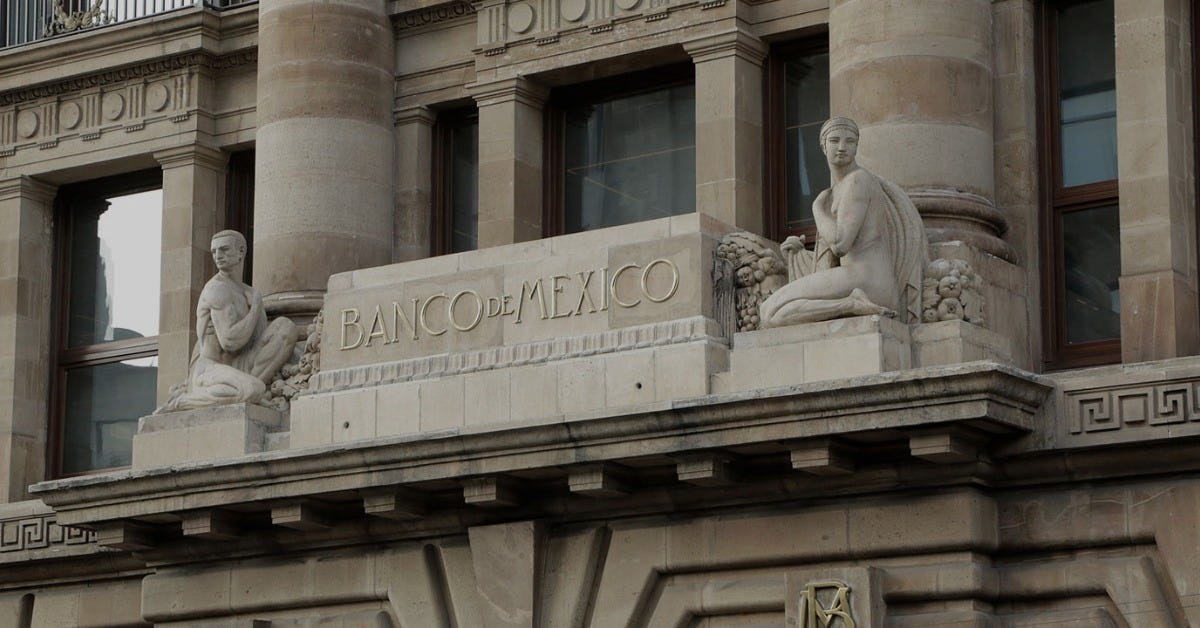
Banxico just made the second signal harder to ignore. In its latest quarterly report, the central bank cut its 2026 growth forecast to 1.1%, down from 1.6%. That is not a collapse. It is worse in a more irritating way: slow enough to pinch wages, tax revenue, business confidence, and household budgets, while still leaving plenty of glossy headlines for politicians and investment promoters.
The strongest way to read Mexico right now is as a split-screen economy. Up top, the screen shows record foreign investment, a strong peso period, nearshoring talk, and World Cup spending. Below it sits weak domestic momentum. Banxico is watching the bottom.
What Banxico actually changed
Banxico’s move followed a weak start to the year. Mexico’s GDP fell 0.6% in the first quarter of 2026 from the previous quarter, according to final INEGI figures also covered by Vallarta Daily in Mexico GDP Drops Less Than Expected in First Quarter. The decline was broad, hitting agriculture, industry, and services. That makes it harder to blame the number on one bad corner of the economy.
A quarterly contraction does not automatically mean recession. Mexico could still grow for the full year if later quarters improve. Banxico’s lower forecast says the rebound now looks smaller than it did a few months ago.
The central bank also cut its benchmark interest rate to 6.50% in May, after a divided vote. That tells a story of its own. Banxico is trying to help a weaker economy without letting inflation expectations get loose again. Rates are still high by the standards of many foreign residents’ home countries, but they are lower than the levels Mexico lived with during the inflation fight.
Here is the annoying part. Rate cuts do not instantly make people buy cars, developers launch projects, or small businesses hire staff. Cheaper credit helps at the edges first. Confidence usually moves more slowly.
The investment headline has a catch
Mexico’s foreign investment numbers look excellent. The Economy Ministry reported $23.591 billion in foreign direct investment in the first quarter of 2026, a record for that period. On paper, that sounds like the nearshoring boom finally walking through the door with a suitcase and a factory helmet.
Much of that money, though, came from reinvested earnings. That still counts, and it is still important. It means companies already operating in Mexico are leaving profits in the country instead of taking everything home. But reinvested profits are different from a wave of new factories breaking ground next Tuesday morning.
New investment is the part that tends to create the biggest visible change: land purchases, construction crews, suppliers, truck traffic, and hiring. Reinvestment can strengthen existing operations without producing the same street-level effect. For a retiree in Puerto Vallarta or a waiter in Guadalajara, the difference is not academic. One version shows up in headlines. The other shows up in paychecks, vacancies, and local demand.
This is how record foreign investment can coexist with weak GDP growth without violating the laws of economics. They measure related things, but not the same thing.
The peso can be strong while growth is weak
A firm peso can make Mexico look sturdier than it feels. Visitors notice the exchange rate first. Importers notice it too. A stronger peso can help hold down the price of some imported goods, which is useful when grocery inflation is already annoying enough.
Exporters, remittance families, and dollar-income retirees see the other side. A stronger peso reduces the local value of dollars. The rent does not politely adjust itself because Banxico had a respectable week.
Currency strength also reflects financial flows, interest-rate differences, and global appetite for risk. It is not a simple public vote on how well the economy is working. Mexico can have a respected central bank, a liquid currency, and attractive yields while domestic businesses still hesitate to invest.
That mixed picture has already been visible in Vallarta Daily’s peso coverage, including Dollar Climbs as Banxico and Moody’s Weigh on Peso. A strong currency can be a sign of confidence. It can also be a squeeze.
Ratings agencies are watching the bill
Credit rating agencies care less about cheerleading and more about whether Mexico can grow enough, collect enough, and keep debt under control. S&P revised Mexico’s outlook to negative in May while keeping its investment-grade rating. The agency pointed to weak growth, slow fiscal consolidation, and pressure from state energy companies, including Pemex and CFE.
Moody’s also moved Mexico closer to the edge of investment grade, a warning Vallarta Daily covered in Mexico Investment is One Step From Junk Grade According to Moody’s. These ratings are not perfect crystal balls. Agencies miss things, arrive late, and sometimes state the obvious in expensive language. Still, investors read them. Governments borrow against them. Markets price risk around them.
The government has pushed back. Finance officials have argued that Mexico keeps solid macroeconomic conditions, a resilient labor market, and room for investment-led growth. President Claudia Sheinbaum has also defended the outlook, saying Mexico is doing well and that investment should lift activity later in the year.
Both sides can be reading real pieces of the same economy. The government sees low unemployment, foreign investment, trade links, and public-private projects. Ratings agencies see low growth, debt pressure, Pemex risk, and weaker fiscal flexibility. Neither view disappears because the other one is politically inconvenient.
What slower growth means for daily life
For foreign residents, slower growth usually arrives quietly. It does not knock on the door and introduce itself as GDP. Instead, it shows up as fewer new jobs, slower wage gains, cautious hiring, and small businesses watching costs more closely.
Prices can behave strangely in that environment. Weak demand can cool some inflation pressure. High service costs, housing demand in popular cities, and food volatility can still keep daily expenses uncomfortable. Banxico’s own problem is that inflation has eased enough to allow rate cuts, but not enough to declare victory.
Rents are even messier. National growth can slow while rents rise in specific neighborhoods. Puerto Vallarta, Mexico City, Mérida, Querétaro, and beach towns do not move only with GDP. They move with tourism, foreign residents, remote workers, local wages, land supply, zoning, security perceptions, and plain old speculation.
Retirees living on dollars should also avoid reading a strong peso as a national health certificate. A stronger peso can reduce imported inflation for Mexico, but it cuts the purchasing power of dollar income. That makes budgeting harder for anyone whose pension, Social Security, or savings are in U.S. currency.
World Cup money is a boost, not a rescue plan
The 2026 World Cup will help parts of Mexico. Hotels, restaurants, transport providers, event workers, and host cities should see activity around the tournament. That is real money. Nobody running a café near a fan zone will complain about a good sales week.
Tournament spending, however, is temporary and uneven. Mexico City, Guadalajara, and Monterrey can benefit without turning the whole national economy into a rocket. Analysts have treated the World Cup as a small growth boost, not a cure for weak investment or household caution.
That distinction is important. One busy month can help service workers and businesses. Sustained growth requires companies to invest, consumers to spend, exporters to sell, and the government to maintain credible finances.
The plain-English version
Mexico is not falling apart. It is also not booming in the way some headlines imply. Banxico’s forecast cut is a reminder that a country can look attractive to foreign investors while still struggling to turn that interest into broad, steady growth.
Nearshoring remains a major opportunity, especially because Mexico’s economy still runs heavily through the United States. The T-MEC review, energy policy, security, infrastructure, rule-of-law concerns, and public finances will determine how much of that opportunity translates into durable growth.
Watch jobs, rents, the peso, grocery prices, interest rates, and whether investment becomes actual construction and hiring. That is where the headline economy either reaches daily life or stays trapped in a press conference.