
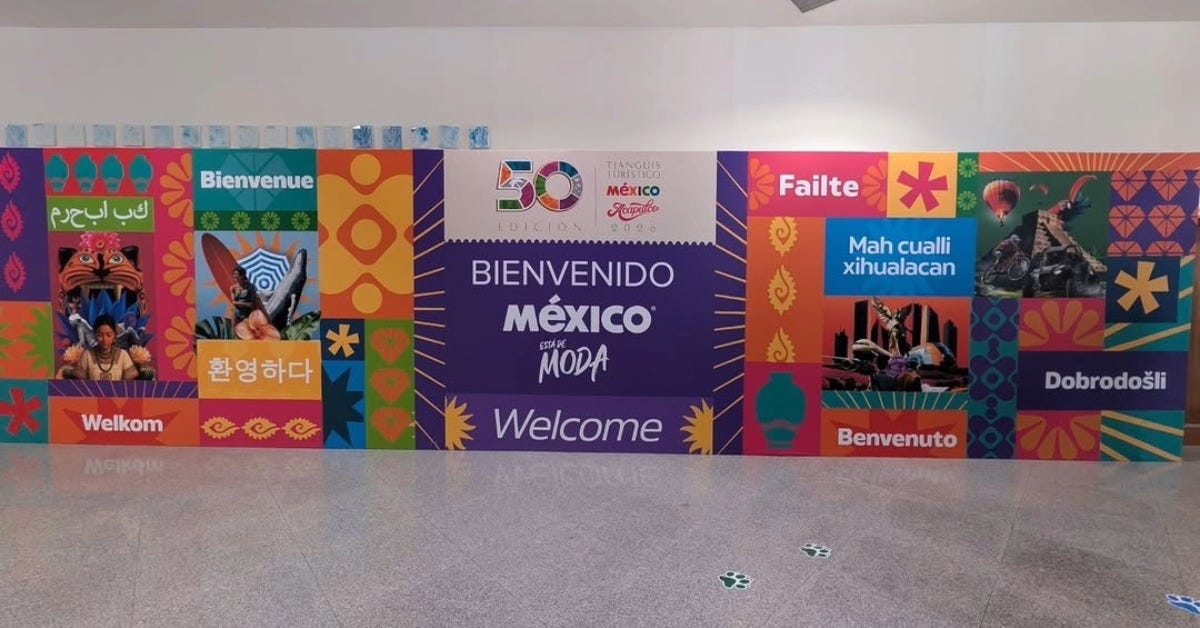
Mexico’s World Cup planning is moving beyond stadiums and fan zones. Federal organizers have opened a new “Bienvenida a México” coordination table focused on the points where visitors first meet the country: airports, customs points, highways, and border crossings. The plan brings together transport, immigration, health, culture, consumer protection, environmental, and security agencies. For travelers, residents, and businesses in tourism areas, the measure offers an early look at how Mexico wants the 2026 tournament experience to begin before the first whistle.
Mexico opens its World Cup front door
Mexico has launched a new World Cup welcome plan aimed at the first points of contact millions of visitors will have with the country: airports, customs areas, highways, and border crossings.
Federal organizers installed the interagency table “Bienvenida a México” as part of the country’s final preparation for the 2026 FIFA World Cup. The goal is to coordinate the government offices that handle arrivals, screening, transport, public information, health risks, consumer protection, and environmental rules.
The plan matters because Mexico’s World Cup will not be confined to stadiums alone. For many visitors, it will begin at an immigration counter, a baggage claim area, a customs checkpoint, a road into a host city, or a transfer from an airport to a hotel.
Mexico is one of three host countries for the 2026 tournament, along with the United States and Canada. Mexican matches will be played in Mexico City, Guadalajara, and Monterrey, with the opening match scheduled for June 11, 2026, in Mexico City.
Why the welcome plan matters
The new table is designed to make the arrival process feel more organized and consistent during one of the largest visitor surges Mexico has prepared for in recent years.
Officials have said Mexico expects millions of additional visitors during the World Cup period. That does not only mean ticket holders. It also includes fans traveling for public screenings, cultural events, hospitality packages, sponsor activities, and side trips to beach and colonial destinations.
That is where the plan becomes broader than sports. Mexico’s airports, highways, and border systems will need to handle regular summer travel while also receiving a new wave of visitors. Some will be familiar with Mexico. Others may be arriving for the first time and may not speak Spanish.
For those visitors, basic coordination can shape the first impression. Clear signs, shorter bottlenecks, visible consumer protections, and predictable border procedures can make a trip feel manageable. Confusion, long waits, or inconsistent information can do the opposite.
The agencies involved
The Bienvenida a México table brings together several federal agencies with different responsibilities.
The Secretariat of Infrastructure, Communications, and Transport is tied to airport, road, and transport coordination. The Defense Secretariat is part of the wider federal security structure. The National Immigration Institute handles entry procedures for foreign visitors.
The National Customs Agency of Mexico is responsible for customs controls. The Secretariat of Culture brings the public-facing cultural component. The federal communication office helps align official messaging.
The plan also includes agencies that many travelers may never think about until something goes wrong. Cofepris oversees health risk protection, including issues linked to food, beverages, and regulated products. Senasica handles agricultural and animal-health controls, which can affect what travelers may bring into the country.
Profeco, Mexico’s consumer protection agency, is involved because prices for tourism services, transport, hotels, restaurants, and event-related sales are expected to face higher demand. Profepa, the environmental enforcement agency, is included as Mexico promotes sustainability and waste-reduction efforts connected to the tournament.
Together, these agencies cover a large part of the visitor experience, from arrival paperwork to food safety, service complaints, and environmental rules.
Not just the three host cities
The World Cup matches in Mexico will be concentrated in three cities. But the travel impact is expected to spread well beyond them.
Guadalajara is the host city closest to Puerto Vallarta, and that matters for Jalisco’s tourism market. Some visitors may use the tournament as a reason to combine football with beach travel. Others may fly through regional airports, visit friends, rent homes, or take side trips before or after matches.
That wider movement is why airports and highways are part of the welcome plan. The tournament is not a closed stadium event. It is a national tourism moment, and the pressure can reach destinations that are not official match sites.
For expats and foreign residents in Mexico, the practical effect may be felt through busier airports, fuller flights, higher hotel demand, more visible security, and more government messaging in travel areas. In some cities, residents may also see more consumer inspections, transport controls, and public-event logistics.
Consumer protection is part of the plan
World Cup travel can create a rush for rooms, tickets, transportation, and merchandise. That creates opportunities for legitimate businesses, but it also raises the risk of price abuse, misleading offers, and fake deals.
Profeco has already been running a verification and monitoring program tied to the tournament. Its work has included inspections and price monitoring for businesses selling World Cup-related products and services.
This is important for foreign visitors because many may not be aware of Mexico’s consumer complaint channels. It also matters for residents, who can face the same inflated prices or misleading promotions in tourism-heavy areas.
The most likely pressure points are hotels, transportation, restaurants, bars, travel agencies, car rentals, souvenirs, sports merchandise, and event packages. Those sectors are expected to see more scrutiny as the tournament approaches.
Health, customs and environmental controls
The inclusion of Cofepris, Senasica, and Profepa shows that Mexico is preparing for more than crowd movement.
Cofepris is relevant because major events can increase food and beverage sales in high-traffic areas. That includes airports, fan zones, restaurants, bars, and informal points of sale. Oversight can help reduce risks tied to unsafe products or poor handling.
Senasica’s role is different but still important. International visitors often carry food, plants, seeds, animal products, or other restricted items without realizing the rules. A larger arrival flow means more need for clear guidance at customs points.
Profepa’s role connects the tournament to waste, plastics, textiles, and environmental impact. Mexico has already promoted environmental campaigns linked to the World Cup, including efforts to reduce plastic and textile waste.
These details may not be as visible as stadium construction or security planning. But they are part of what makes a large event function in daily life.
What travelers should watch for
For travelers, the main takeaway is simple: Mexico is trying to make the first stage of arrival more coordinated ahead of the World Cup.
That could mean clearer arrival information, more visible officials, more checks at entry points, and stronger oversight of businesses connected to tourism and events. It could also mean stricter enforcement of what travelers can bring into the country.
Visitors should expect airports in host cities to be busier during match periods. They should also expect demand in nearby destinations, especially where direct flights, beach tourism, and short transfers make side trips easy.
Residents should watch for local announcements as the tournament approaches. Host-city plans are likely to include road closures, shuttle routes, airport advisories, security zones, public screening areas, and rules for large gatherings.
The real test is coordination
The welcome plan is not only about hospitality. It is a test of whether many agencies can work together under pressure.
That is often where large events succeed or fail. A visitor may not care which agency handles customs, transport, health inspections, or consumer complaints. They will judge the experience by whether the process is clear, safe, and fair.
Mexico has hosted the World Cup before, but the 2026 edition is larger. It will include 48 national teams, three host countries, and a longer tournament footprint across North America.
For Mexico, the challenge is to make the event feel organized from the first point of contact. That begins before fans reach a stadium seat. It begins when they arrive.