
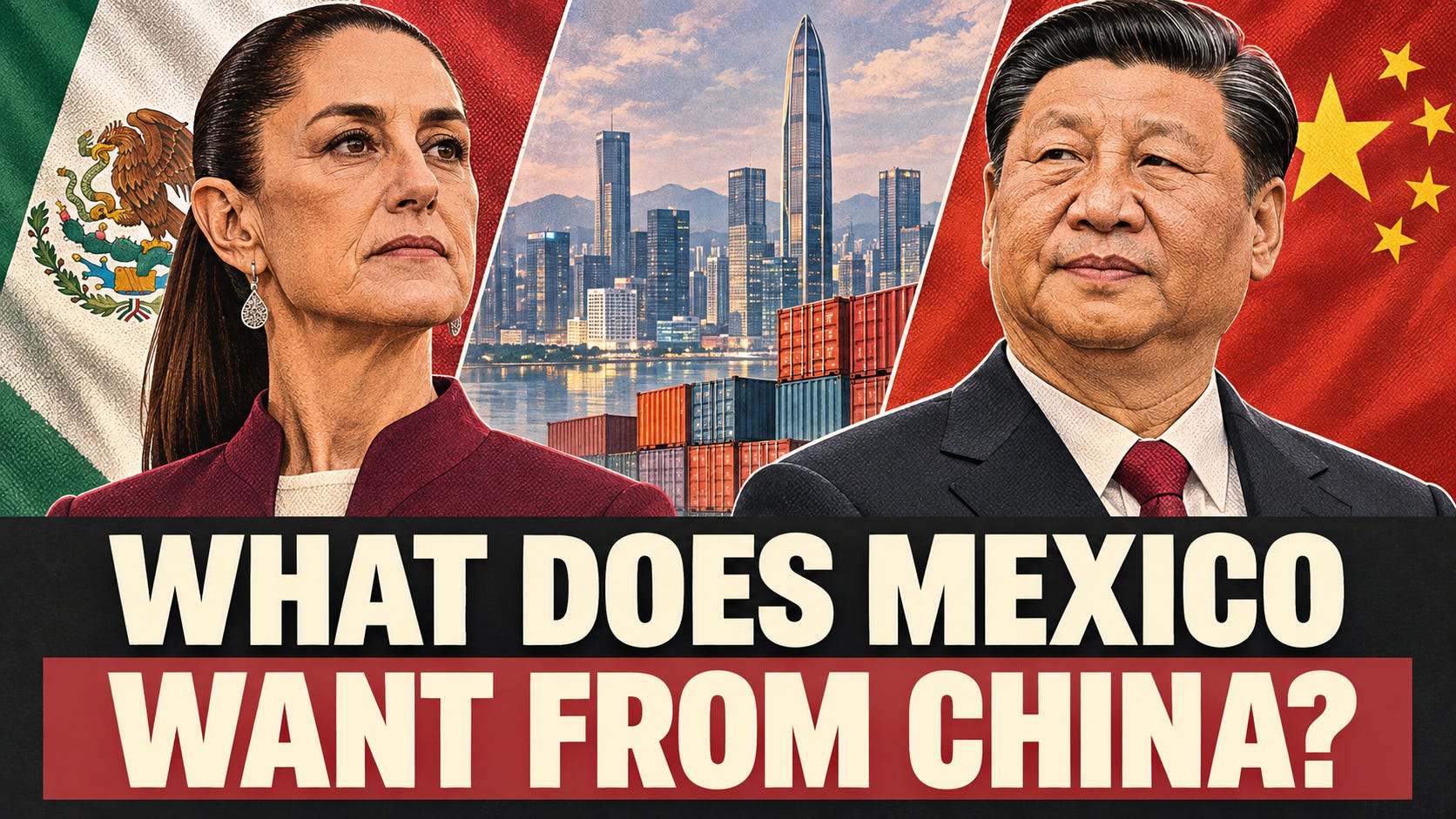
President Claudia Sheinbaum is traveling to Shenzhen, China, for the APEC summit (Nov. 18–19) and a meeting with President Xi Jinping. The Mexican government informed the Senate on Tuesday that she’ll leave Nov. 15 and return Nov. 20.
The Secretaría de Relaciones Exteriores says the visit is about looking for new export markets, attracting investment and strengthening supply chains as part of Plan México. Economy Secretary Marcelo Ebrard and Foreign Secretary Roberto Velasco will be going with Sheinbaum. Her government has yet to say what specific agreements it’s looking to secure from Xi.
Last year, Mexico exported $10.2 billion in goods to China and imported $133.3 billion from China, according to Banco de México. The U.S. accounted for 83% of Mexico’s goods exports.
This will be Sheinbaum’s first trip to China as president. She met Xi in November 2024 at the G20 summit in Rio de Janeiro. Since then, Mexico has raised tariffs on a range of goods from countries it has no free trade agreement with, including China. The tariff increases took effect in January and covered cars, auto parts, textiles and steel. China’s Ministry of Commerce said in March that Mexico’s measures amounted to trade and investment barriers.
Where Mexican businesses could gain
China bought about $263 million worth of Mexican agricultural and food products last year, making it Mexico’s ninth-largest market for those goods, according to the Secretaría de Agricultura y Desarrollo Rural. In August, Chinese officials raised the issue of rice and sorghum with the ministry. Mexico already has a sorghum export protocol with China that sets out inspection and certification requirements. Making those steps easier for growers would be one way to expand trade under an existing agreement.
Mexico sold over $1 billion in agricultural and fishery products to Japan last year, according to the same ministry. Mexico is looking to sell more pork, beef, avocados and agave spirits there.
China was Mexico’s largest foreign buyer of copper ore and concentrates, according to the Secretaría de Economía’s 2024 product data. Sonora led the country in exports of those products.
For electronics and auto parts suppliers, the opportunity also lies in selling to Asian companies that manufacture in Mexico. Taiwan’s Quanta Computer has increased its capacity in Monterrey to produce AI servers and electric vehicle parts, according to research from the Federal Reserve Bank of Dallas. Getting more Mexican-made parts into those supply chains is one of the aims of Plan México.
The North American trade talks
The T-MEC (Tratado entre México, Estados Unidos y Canadá) is still in force after the U.S. declined to extend it at the July review. Ebrard said last week that Mexico was still waiting for a fourth round of talks with U.S. negotiators.
The two sides have already discussed the rules on how much of a vehicle has to be made in North America to qualify for the pact’s tariff benefits. For passenger cars and light trucks, the current rules generally require 75% North American content by value, along with other requirements. So for any automaker looking to invest in Mexico, where the parts are made is going to be a factor.
Sheinbaum said last week that she’d like to see U.S. President Donald Trump at the summit if he attends. Trump has since said he intends to go to Shenzhen. A meeting between the two presidents has yet to be announced.
APEC operates by consensus, and its commitments are voluntary. The summit gives leaders a chance to meet one-on-one, as Sheinbaum plans to do with Xi. It also gives Mexico time to prepare for its turn as host in 2028. Mexico last hosted the leaders’ summit in Los Cabos in 2002.
Following the trip, Sheinbaum is due to report back to the Senate under Article 88 of the Constitution. The government’s notice says the report will include any agreements reached during the visit.