
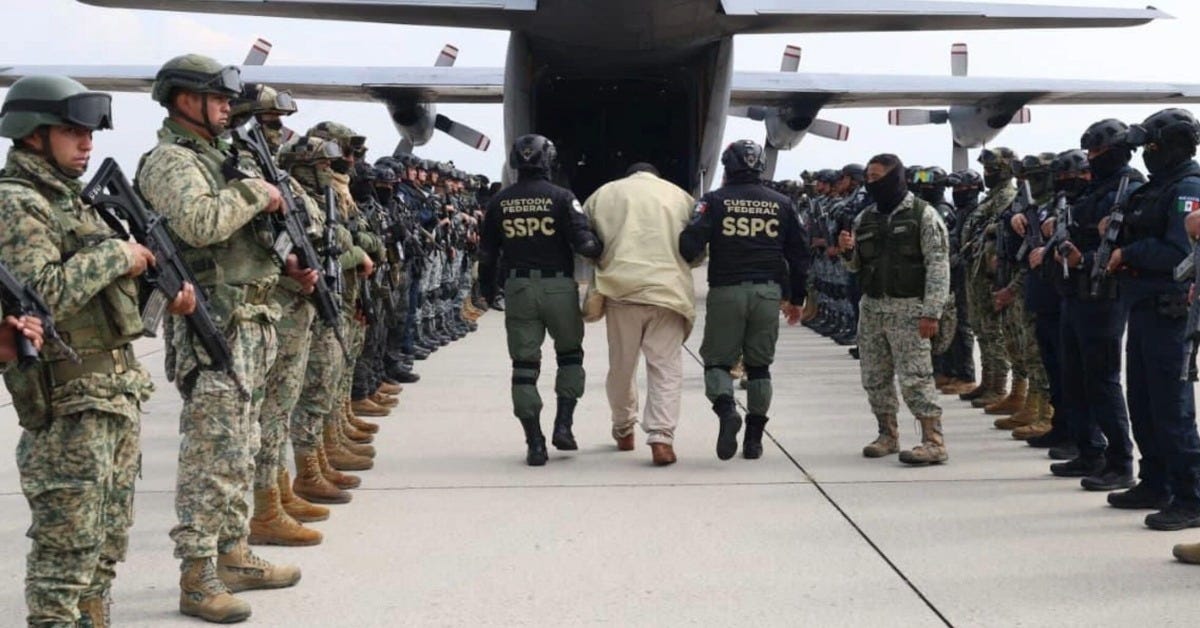
Washington is raising the bar for anti-drug cooperation with Mexico. The White House’s 2026 drug strategy says U.S. assistance should depend on measurable results, including arrests, prosecutions, extraditions, and the dismantling of synthetic drug labs. The move comes as fentanyl, cartel finances, and precursor chemicals remain central issues between both countries. For Mexico, the challenge is balancing security cooperation with sovereignty, due process, and growing pressure from its northern neighbor.
US conditions Mexico drug aid on cartel arrests and extraditions
The United States is putting new conditions on anti-drug assistance to Mexico. The White House’s 2026 National Drug Control Strategy says future help should be tied to clear results against cartels, synthetic drug labs, and the chemical supply chains used to make fentanyl and methamphetamine.
The document does not describe a broad cutoff of U.S. cooperation. Instead, it sets a tougher standard for security assistance. Washington wants tangible results from Mexico, including action to arrest, prosecute, and extradite leaders of groups the U.S. now treats as foreign terrorist threats.
The strategy also calls for Mexico to help dismantle synthetic drug labs, seize more precursor chemicals, and reduce cartel production capacity. These demands place extradition, intelligence sharing, and cartel enforcement at the center of the U.S.-Mexico security relationship.
For foreign residents in Mexico, this is not a change to immigration rules or daily travel. But it could shape the political climate, cross-border cooperation, and security operations in parts of the country affected by organized crime.
What Washington is asking from Mexico
The strategy says U.S. agencies will work with Mexico through diplomatic, law enforcement, and justice-sector channels. That support includes training, intelligence sharing, border security, and joint operations.
But the key change is the condition attached to that support. The White House says assistance should depend on Mexico producing measurable outcomes. Those outcomes include arrests, prosecutions, extraditions, and the destruction of drug labs.
That language matters. It signals that Washington wants to move beyond promises of cooperation. It wants numbers, cases, and visible action.
The U.S. government is especially focused on leaders of organizations it has classified as foreign terrorist organizations. That designation changes the way Washington frames cartel activity. It treats cartel networks not only as criminal groups, but also as national security threats.
This shift gives U.S. agencies more room to use sanctions, financial tools, and terrorism-related prosecutions. It also increases pressure on Mexico to act against cartel leaders when U.S. prosecutors file charges or request extradition.
Why synthetic drugs changed the debate
The main driver is fentanyl. U.S. officials say Mexican cartels dominate the production and trafficking of synthetic drugs entering the United States, especially fentanyl and methamphetamine.
Unlike plant-based drugs, synthetic drugs can be produced in small labs with chemicals that move through legal supply chains. That makes the problem harder to track. It also shifts attention to chemical suppliers, brokers, shipping companies, pill presses, and laboratory equipment.
The strategy prioritizes precursor chemicals. These are substances that may have legal industrial uses, but can also be diverted into illegal drug production.
Washington wants more reporting of chemical seizures, stopped shipments, diversion attempts, and discovered labs. The strategy sets targets for increased reports from Mexico, China, Colombia, and India through an international precursor reporting system.
That detail shows how the U.S. is viewing the drug trade. It is not just about looking at smugglers at the border. It is looking at the full supply chain, from chemical sourcing to manufacturing, transport, money laundering, and retail distribution.
Extradition is becoming a bigger test
Extradition has long been one of the most sensitive issues in U.S.-Mexico security cooperation. The United States often seeks to prosecute cartel leaders in federal courts. Mexico must decide whether those requests meet its own legal standards.
An extradition request does not automatically mean a person will be sent to the United States. Mexico has its own review process. Courts and federal authorities can examine whether the request meets treaty rules, due process standards, and evidence requirements.
That distinction is important now. Washington is asking for faster and stronger action. Mexico is trying to show cooperation without appearing to surrender its legal authority.
The issue has grown sharper after recent high-profile transfers of suspects from Mexico to U.S. custody. In January 2026, the United States said it received 37 fugitives from Mexico facing charges tied to drug trafficking, firearms, money laundering, human smuggling, and terrorism-related cases.
Those transfers were not routine. U.S. officials described them as part of a wider campaign against cartel networks. They also highlighted Mexico’s role in handing over suspects who were wanted in U.S. courts.
The new strategy suggests Washington wants that kind of cooperation to become more consistent.
Mexico’s sovereignty line
Mexico’s government has repeatedly said it will cooperate with the United States, but not at the United States’ expense. That position reflects a long-standing political concern in Mexico. Security cooperation with Washington can bring intelligence, equipment, and prosecutorial support, but it can also trigger accusations of foreign interference.
This is the central tension. The United States wants measurable results. Mexico wants respect for its courts, its laws, and its sovereignty.
That balance will be harder to maintain if Washington ties future assistance to specific outcomes. Mexico may face pressure to act quickly on U.S. requests. At the same time, Mexican officials will need to show that arrests and extraditions are based on evidence rather than political pressure.
The issue is also sensitive because cartel cases often touch local police, state officials, business networks, and political figures. If U.S. prosecutors accuse Mexican citizens or officials, Mexico must decide whether the evidence is strong enough to support action at home.
Sanctions and the money trail
The strategy also expands the focus on money. Washington says it will use financial sanctions, asset seizures, and anti-money-laundering tools against cartels and their support networks.
This includes targeting people and companies that help move drug profits, buy chemicals, ship equipment, or hide cartel money. The U.S. Treasury has already used sanctions against networks accused of helping the Sinaloa Cartel obtain chemicals and equipment for synthetic opioids.
The message is clear. The United States wants to hit cartels where they operate like businesses. That means attacking suppliers, brokers, front companies, financial institutions, and logistics networks.
This part of the strategy could affect companies outside the drug trade if they fail to monitor their supply chains. Chemical, shipping, pharmaceutical, and logistics firms may face more scrutiny if U.S. authorities believe their services are being used by criminal networks.
Border security and weapons trafficking
The strategy also connects drug trafficking with border security and firearms. Washington says the nearly 2,000-mile border with Mexico remains the main corridor for illicit drugs entering the United States.
At the same time, Mexico has long argued that U.S.-sourced weapons fuel cartel violence inside Mexico. The White House strategy includes language on disrupting southbound firearms trafficking, which has been a recurring demand from Mexican officials.
That creates a shared but uneven agenda. The United States wants Mexico to stop drugs, precursors, and cartel leaders. Mexico wants the United States to do more about guns and money flowing south.
Both sides have leverage. Both also have domestic political audiences watching closely.
What could happen next
The next test will be how the United States applies the condition in practice. The strategy says assistance will depend on tangible results, but it does not spell out a public scoring system for Mexico.
That leaves room for negotiation. It also leaves room for conflict.
If Mexico increases arrests, extraditions, and lab seizures, Washington may point to the strategy as a success. If Mexico resists U.S. requests or demands more evidence, the relationship could become more tense.
Sanctions may also expand. U.S. agencies are likely to keep targeting chemical suppliers, money launderers, and cartel-linked business networks. These actions can happen without Mexico’s direct approval, which may add another layer of pressure.