
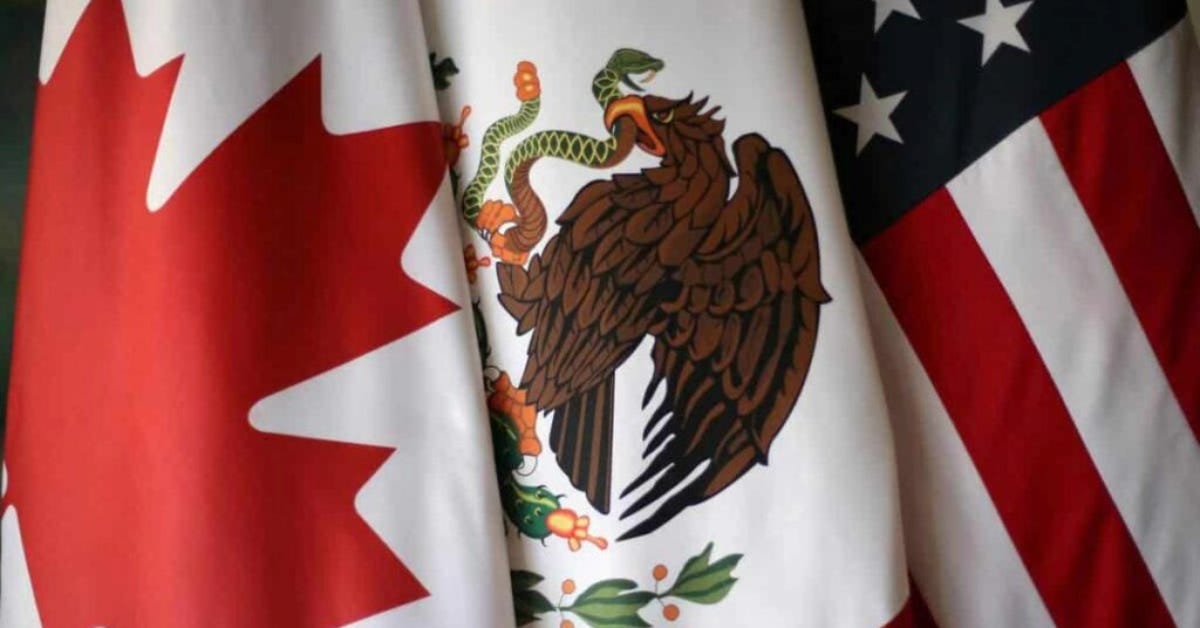
Mexico, the United States, and Canada will open the formal USMCA review path on July 1, with Mexico pushing for long-term certainty while Washington presses harder on autos, agriculture, steel, and regional content rules.
Economy Secretary Marcelo Ebrard said the three countries will hold a virtual meeting to define the route for the review, including whether the deal can be extended or must enter a longer cycle of periodic reviews.
“The first of July is practically the date to mark the start of the formal review of the treaty,” Ebrard said after the latest talks in Washington.
What July 1 means for USMCA
The USMCA, known in Mexico as T-MEC, replaced NAFTA and took effect on July 1, 2020. Its six-year review clause gives the three governments a choice: extend the deal for another 16 years or keep it alive under a more uncertain review process.
If all three countries agree to extend it, the agreement would run to 2042. If one country refuses, the treaty does not end immediately. It would remain in force, but the governments would move into annual reviews through the current term, which runs to 2036.
That is the real pressure behind July 1. It is a choice between certainty and a decade of recurring doubt.
The concern is no longer just whether USMCA survives. It is whether companies, farmers, and manufacturers can make decisions without wondering if next year’s politics will rewrite the rules again. That risk is the same one PVDN outlined in USMCA talks could leave Mexico waiting for a decade.
Mexico wants renewal, not a full rewrite
Mexico’s public position has been steady. It wants the agreement extended and kept as the backbone of North American trade.
That does not mean the talks will be simple. Ebrard said Mexican negotiators presented proposals during the Washington round on rules of origin, economic security, agriculture, the auto industry, and other issues that will shape the review.
A new round is expected the week of July 20 in Mexico City, where the discussion is supposed to move from broad positions into more detailed text.
Trade rules often sound technical until they hit prices, jobs, and investment. A small change in how a product qualifies for tariff-free treatment can affect where factories buy parts, where companies expand, and how much it costs to move goods across borders.
Autos, agriculture, and steel lead the pressure
The toughest fight is likely to center on North American content rules.
The U.S. Trade Representative’s office said earlier talks covered automotive rules of origin, steel and aluminum, and economic security. Washington has also framed the review around reducing the U.S. trade deficit with Mexico, strengthening supply chains, and limiting what it sees as “free-riding” from third countries.
That language indicates a harder U.S. position on goods made with inputs from outside North America, especially China.
For Mexico, the auto sector is the clearest challenge. The country has built one of the world’s most important vehicle and auto-parts platforms around U.S. demand. Tougher origin rules could protect regional production, but they could also raise costs for manufacturers already navigating tariffs, compliance requirements, and shifting supply chains.
Agriculture is another sensitive lane. Mexico imports major farm products from the United States, while exporting fruit, vegetables, beer, and other goods north. Any fight over biotech corn, market access, or food rules can quickly become both economic and political.
Why the U.S. relationship gives Mexico leverage
Mexico is not entering the review empty-handed.
The U.S. Trade Representative lists Mexico as one of Washington’s top trading partners, with U.S.-Mexico goods trade reaching an estimated $872.8 billion in 2025. The same U.S. trade profile shows that more than 80 percent of Mexico’s exports went to the United States in 2024.
That gives Mexico leverage because U.S. companies depend on Mexican factories, parts, food exports, and logistics. It also leaves Mexico exposed because much of its economy still relies on the U.S. market.
That dependence is why trade uncertainty matters beyond the negotiating room. As PVDN explained in Why Mexico’s Economy Still Runs Through the U.S., exports, manufacturing, investment, and supply chains all tie Mexico’s outlook closely to Washington.
The government wants to preserve the treaty, avoid a broader rupture, and limit the damage from U.S. tariff pressure without giving away too much policy space.
Trump adds uncertainty to the review
President Donald Trump has made the review harder to read. He has questioned whether the United States needs the agreement at all, even as his government continues preparing for formal talks.
That creates a different kind of negotiation. Mexico and Canada are arguing for long-term regional certainty. Washington is signaling that renewal may come with a price.
The result is a review that could stay narrow and technical, or become a larger renegotiation in everything but name.
The USMCA review clause was designed to force the three countries to check whether the agreement is working. It did not settle how far governments can go in demanding changes during that review. That gray area is where much of the risk lies.
I have been paying for a subscription to your newspaper for several years. Now that you’re on Substack, you’re coming to me for money again. Either acknowledge the money that I’ve already spent, or give me a refund.