
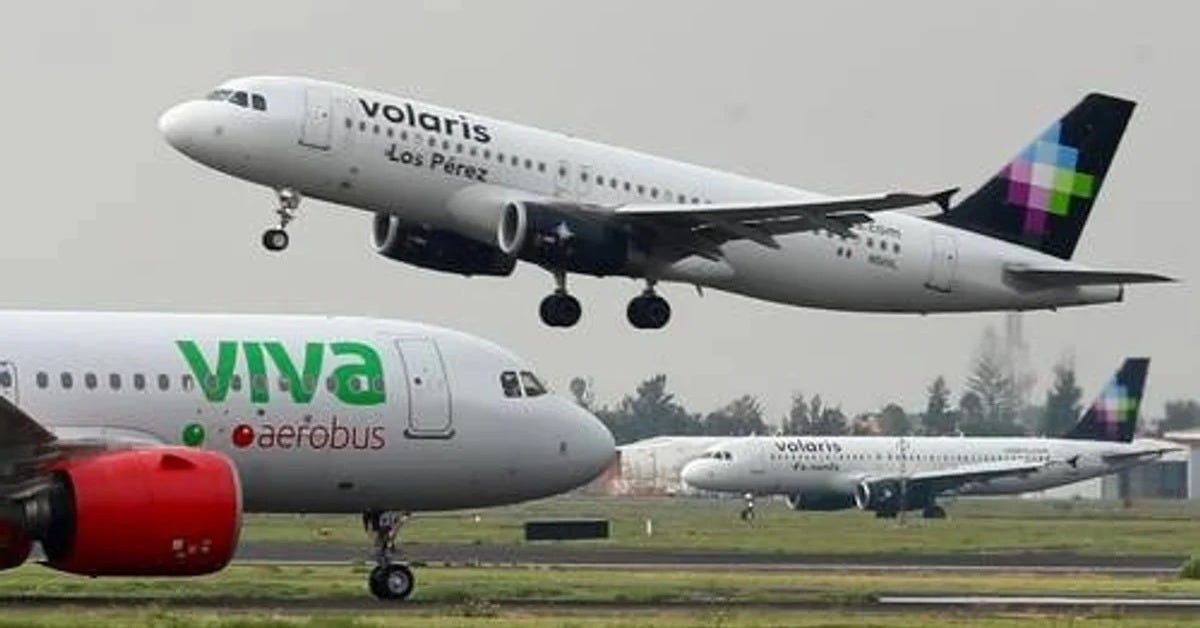
Mexico’s two largest low-cost airlines entered 2026 with strong passenger demand but weaker financial results. Viva Aerobus and Volaris reported a combined first-quarter loss of $145 million, raising new questions about fares, route growth, and their planned merger. The losses do not mean either carrier is in immediate trouble. But they show how exposed budget airlines can be when fuel prices rise, the peso strengthens, and operating costs outpace ticket revenue.
Viva and Volaris losses raise Mexico fare questions
Mexico’s two main low-cost airlines entered 2026 with a warning sign for travelers. Viva Aerobus and Volaris posted a combined first-quarter net loss of $145 million, as fuel and currency pressures cut into revenue gains.
The losses do not mean either airline is at immediate risk of failure. Both carriers still reported heavy passenger volumes and large cash positions. But the quarter shows how quickly Mexico’s low-fare airline model can tighten when fuel rises, and the peso strengthens against the dollar.
For residents who depend on low-cost flights for visits home, visa trips, medical travel, or regional getaways, the pressure could show up in less visible ways. That can include higher base fares, more expensive add-ons, fewer seats on some routes, or slower route growth through the rest of the year.
Fuel and the peso hit the low-cost model
Viva Aerobus reported a net loss of $74 million in the first quarter of 2026. That was wider than its $42 million loss in the same period last year. The airline’s operating revenue rose to $528 million, but expenses rose faster.
Volaris reported a net loss of $71 million, compared with a $51 million loss a year earlier. Its operating revenue rose to $770 million, but total operating expenses reached $791 million.
Together, the numbers point to a basic problem. The airlines were still filling planes, but costs rose faster than revenue.
Fuel was one of the main pressures. Jet fuel is a large part of airline operating costs, and it matters even more for low-cost carriers. These airlines depend on high passenger volume, tight cost control, and steady aircraft use.
The exchange rate also worked against the carriers in some areas. A stronger peso can raise the dollar value of peso-based expenses when companies report results in U.S. dollars. That can affect salaries, airport services, local overhead, and other operating costs.
The issue was not empty planes
The first quarter is usually a slower travel period. It comes after the holiday season and before the stronger summer months. Even so, the scale of the losses stood out because both airlines had their weakest first-quarter performance in five years.
Viva booked about 6.9 million passengers, up 1.3% from a year earlier. Volaris carried about 7.7 million passengers, up 4.5%. Volaris also reported stronger growth on international routes than on domestic routes.
That means demand did not collapse. The pressure came from the gap between what airlines earned and what they spent to operate.
This is an important distinction for travelers. Airlines can be busy yet still lose money if fuel, maintenance, financing, lease costs, and labor costs rise too quickly.
Fare pressure may be gradual
Travelers should not read the losses as a sign that fares will jump overnight. Airline pricing depends on route, season, competition, airport fees, and how far in advance tickets are booked.
But the first-quarter results suggest that fare pressure is already part of the response.
Volaris said its average base fare rose to $42 during the quarter. It also reported higher income from additional services, such as baggage, seat selection, and other travel extras.
That matters because low-cost airlines often keep base fares low while charging separately for services. For travelers, the final cost of a trip can rise even when the advertised fare looks cheap.
Viva also signaled a more cautious approach to capacity. In airline terms, capacity means how many seats an airline puts into the market. When carriers reduce capacity, fewer seats are available. That can support prices, especially on busy routes.
The merger adds a bigger question
The losses come as Viva Aerobus and Volaris continue to pursue a corporate-level merger. The plan would bring the two airline groups under a shared structure, while keeping their brands and operations separate.
The deal still faces regulatory review. That review is important because the two carriers are major players in Mexico’s domestic market. Together, they represent a large share of low-cost flying in the country.
For the airlines, the merger argument is simple. A larger group could have more buying power, better aircraft planning, and lower long-term costs. That could help them compete with larger carriers and manage fuel or leasing pressure.
For consumers, the concern is also clear. If too much of the market is controlled by one group, travelers may have fewer choices on some routes. Regulators will have to weigh those competing claims.
What travelers should watch next
The next few months will show whether the first quarter was a temporary squeeze or the start of a longer adjustment.
Travelers should watch base fares, baggage fees, schedule changes, and route reductions. These are often the first places where airline financial pressure becomes visible to passengers.
Routes with several competing airlines may see less pressure. Routes with fewer competitors could be more exposed to higher prices or reduced frequency.
For expats and frequent travelers in Mexico, the practical advice is simple. Compare the total trip cost, not just the ticket price. A low fare can change quickly once baggage, seats, payment fees, and airport taxes are added.
The larger story is that Mexico’s low-cost airline model is still moving large numbers of passengers. But the first quarter showed that high demand alone is not enough when fuel, currency, and operating costs move against the airlines simultaneously.