
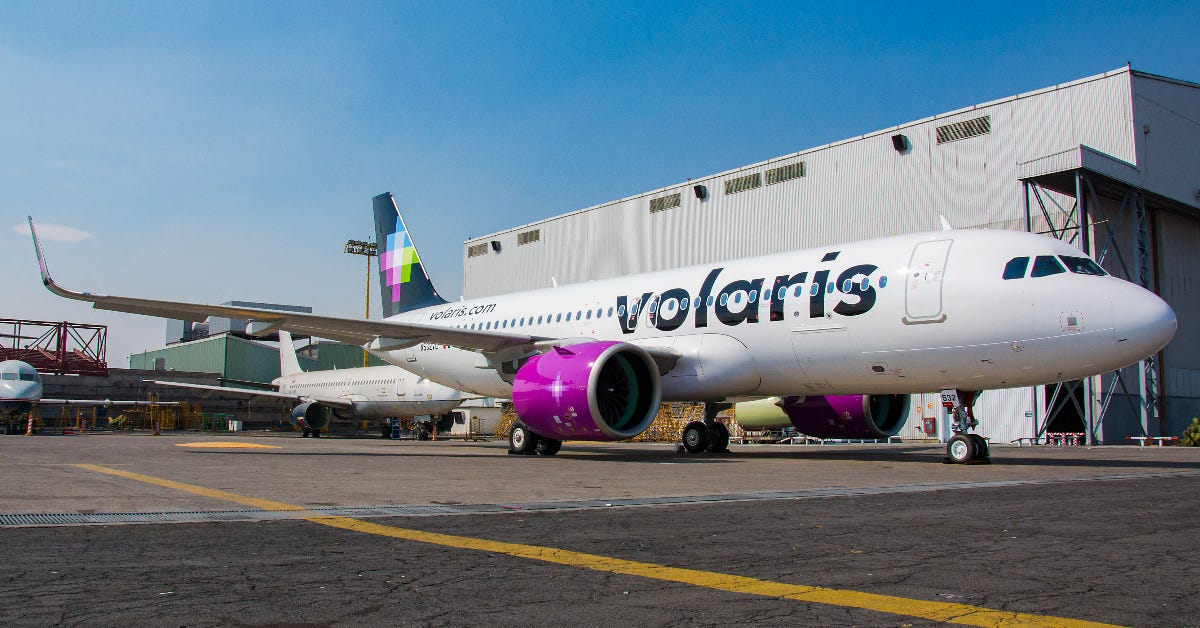
Volaris is adding 35 routes in June, a move that could change how travelers move between Mexico and the United States, as well as to several inland cities often overlooked by visitors. The announcement came at Tianguis Turístico in Acapulco and points to a wider shift in Mexico’s air map ahead of the 2026 World Cup. For expats and frequent travelers, the bigger question is not just where the airline is flying, but what the expansion says about demand, pricing, and regional access.
Volaris adds new routes as Mexico prepares for busier travel
Volaris announced 35 new routes scheduled to begin operating in June, expanding its network at a time when Mexico is preparing for stronger domestic and international travel demand.
The announcement was presented during Tianguis Turístico 2026 in Acapulco, Mexico’s major tourism trade event. The new routes strengthen Volaris hubs in Guadalajara and Tijuana, while adding more service to cities in central Mexico and the Bajío, including Puebla, Querétaro, Aguascalientes, and San Luis Potosí.
For travelers in Mexico, the expansion matters because it is not limited to beach destinations or the country’s largest cities. It points to a growing push to connect mid-sized cities with one another, with major hubs, and with U.S. markets with strong family, business, and tourism ties to Mexico.
Eleven of the new routes connect Mexico with cities in the United States. The U.S. destinations include Houston, Los Angeles, Newark, Dallas-Fort Worth, Denver, Orlando, San Antonio, Chicago, Detroit, and Salt Lake City.
Why the new routes matter for travelers
The timing is important. Mexico will co-host the 2026 FIFA World Cup with the United States and Canada, and Mexican host cities include Mexico City, Guadalajara, and Monterrey. That has put more attention on airport capacity, domestic links, and cross-border routes.
Volaris framed the expansion as a way to support tourism, business travel, and regional mobility. The company’s model is based on low base fares, with added charges for many extras. That makes the headline price attractive, but travelers still need to compare the full cost after airport fees, baggage, seat selection, and other services.
Introductory fares tied to the new routes were listed from 149 pesos for domestic flights and from 84 dollars for international flights, depending on route and availability. Those fares do not include all taxes, airport fees, or optional charges, which can change the final price.
For expats and frequent visitors, the practical value may be less about one cheap ticket and more about new options. More routes can reduce the need to connect through Mexico City. They can also make short regional trips easier, especially for people who split time between Mexico and the United States.
Guadalajara and Tijuana remain key pieces of the network
Guadalajara and Tijuana are central to this expansion because both cities already serve as major bases for Volaris. Guadalajara is also one of Mexico’s World Cup host cities, giving the route expansion extra relevance ahead of 2026.
Tijuana has long played a major role in cross-border travel. Its proximity to Southern California makes it useful for travelers moving between Mexico and the western United States. For some passengers, Tijuana can also serve as an alternative to flying through larger U.S. airports.
Guadalajara’s role is different. It is a major economic, cultural, and transportation hub for western Mexico. More flights through Guadalajara can support travel to Jalisco, the Bajío, and Pacific destinations that depend on domestic tourism as much as international arrivals.
The strategy also reflects how Mexico’s air market has changed. Low-cost carriers have become central to domestic travel, especially for passengers who once relied on long-distance buses. When shorter routes become available at competitive prices, flying can become more practical for weekend trips, family visits, and regional business.
Puerto Vallarta gets a local connection to the wider story
Puerto Vallarta is not the center of this announcement, but it is part of the wider route map. Promotional route information tied to the launch includes connections from Puerto Vallarta to Puebla, San Luis Potosí, and Aguascalientes.
That matters for the Bay of Banderas area because Puerto Vallarta’s tourism economy depends on both international and domestic travel. U.S. and Canadian visitors are important, but Mexican travelers also play a large role during holiday periods, long weekends, and summer travel.
New domestic connections can help diversify the visitor base. They can also make Puerto Vallarta easier to reach for people in inland cities that do not always have as many nonstop beach options.
For residents, the benefit goes both ways. More direct flights can make it easier to visit family, handle business, or take short trips without passing through Mexico City. That is especially useful for people who live in Puerto Vallarta full-time and rely on air travel for medical appointments, immigration paperwork, family visits, or regional work.
Central Mexico and the Bajío gain more flight options
The announcement gives special attention to central Mexico and the Bajío. Cities such as Querétaro, Aguascalientes, and San Luis Potosí have grown as business, industrial, and residential centers. They also have growing appeal among foreign residents who prefer inland cities to coastal destinations.
More air service can support that growth. It can make these cities more accessible for visitors, investors, remote workers, and families who travel often between Mexico and the United States.
Querétaro appears especially prominent in the expansion. The city has become one of Mexico’s strongest growth areas for manufacturing, services, education, and foreign residents. Better air links can add to that momentum, especially if they reduce dependence on Mexico City’s airport.
Puebla also stands out. The city is close to Mexico City by road, but direct air links can still matter for travelers who want to avoid the capital’s congestion. New routes from Puebla can make it easier to reach beach destinations and U.S. cities without first making a ground transfer to Mexico City.
What passengers should watch before booking
The first thing travelers should check is the final fare, not only the advertised base price. Volaris’ lowest fares usually come with baggage limits and limited flexibility. A ticket that looks cheap at first can rise once carry-on bags, checked luggage, seats, or schedule changes are added.
Travelers should also check the airport used in each city. In some markets, airport location can affect the real cost of the trip. Ground transportation, arrival time, and connection options can matter as much as the airfare.
Schedule frequency is another key point. Some new routes may not operate daily. A route with two or three flights per week can still be useful, but it requires more planning. That is especially true for travelers with medical appointments, cruise departures, or international connections.
The broader takeaway is that Mexico’s air map is still shifting. More routes can help, but passengers should look beyond the announcement and confirm dates, frequency, airport fees, and baggage rules before booking.
A sign of where Mexico travel is heading
Volaris’ expansion comes as Mexico looks to strengthen tourism before one of the busiest global sports events in recent memory. The World Cup will bring added attention to Mexico City, Guadalajara, and Monterrey, but the impact could spread beyond those host cities.
Better air links can help secondary destinations capture some of that movement. They can also support domestic tourism, which remains a major part of Mexico’s travel economy.
For foreign residents, the route expansion is a reminder that Mexico’s travel network is not only built around vacations. It also serves families, workers, retirees, students, and people who move regularly between cities and countries.
The full impact will depend on pricing, reliability, and demand after the routes begin. But the direction is clear: Volaris is betting that Mexico needs more short, direct, and regional flight options as travel patterns grow more complex.