
Mexico will host only 13 World Cup matches, but the larger test will unfold outside the stadium gates. Mexico City is preparing free, alcohol-free fan festivals across the capital. Monterrey is adding robot dogs to its security plan. Between those two choices sits a bigger question: can host cities manage crowds, transit, policing, street vendors, and public space without turning the tournament into a show that ordinary residents mostly watch from the curb during the busiest weeks?
What the 2026 World Cup Will Test in Mexico: Streets, Security, Transport, and Public Space
A tournament that will spill into the streets
Mexico’s role in the 2026 World Cup will be smaller on the match calendar than many casual fans may expect. The country will host 13 matches across Mexico City, Guadalajara, and Monterrey. The full tournament, shared with the United States and Canada, will run from June 11 to July 19 with 48 teams and 104 matches.
But the test for Mexico will not be limited to those 13 games.
The larger question is how Mexican cities handle the World Cup outside the stadiums. That means streets, plazas, sidewalks, transit lines, police operations, informal vendors, public viewing areas, and everyday neighborhoods that must keep functioning while millions of people move through a global event.
Mexico City’s latest plan gives a clear example. The capital is preparing 18 free fan festivals across the city, including the FIFA Fan Festival in the Zócalo and public events in the boroughs. The events are designed to bring the tournament to people who do not have match tickets. They will include giant screens, cultural programming, food areas, and family activities.
Monterrey is moving in a different direction with another symbol of World Cup planning. Guadalupe, the municipality that includes Estadio BBVA, now has a K9-X robot-dog security unit. The robotic devices are being promoted as first-response tools for crowd control, surveillance, and risk detection near major events.
Together, those two developments show what Mexico’s host cities are really preparing for. The tournament is not just a sports event. It is a pressure test of how public space is managed when global entertainment, security policy, local commerce, and civic life all collide.
Mexico City wants a World Cup beyond ticket holders
The strongest part of Mexico City’s plan is also the most complicated. By announcing free public viewing events across the capital, officials are trying to avoid a World Cup that belongs only to people with expensive tickets, hotel packages, or private hospitality access.
That matters because World Cup tickets and official hospitality packages are out of reach for many residents. Even public enthusiasm can be unequal when the cheapest way to participate remains too expensive for local families.
The 18-festival model gives the city a way to extend the tournament beyond the south-side stadium area. The Zócalo will serve as the central fan site, while other events will be placed across the capital’s boroughs. Some sites are expected to show every match. Others will focus on key games, especially Mexico matches.
This approach makes the World Cup more visible in daily life. It also reduces pressure on the stadium area by giving people a place to gather elsewhere. That is important in a city where large crowds already strain roads, sidewalks, police resources, and public transportation.
The free model also creates a political message. Mexico City is presenting the tournament as a public celebration, not just a paid entertainment product. But free access does not automatically mean open access. The details will matter.
Entry rules, crowd limits, security checks, vendor permissions, alcohol rules, and public transport access will shape who actually feels welcome. A free festival can still feel controlled, crowded, or exclusionary if the rules are not clear.
Alcohol-free festivals and private hospitality zones
One of the clearest policy choices is alcohol. Mexico City’s fan festivals are being framed as alcohol-free public events. Officials have presented that as a safety and family-oriented decision.
The idea is easy to understand. Alcohol can complicate crowd control, especially during high-emotion matches. It can increase the risk of fights, disorderly behavior, medical calls, and pressure on police. For large public plazas, an alcohol-free rule may help keep the events calmer and more accessible to families.
But the alcohol question also exposes a divide between public and private spaces.
In public fan festivals, the rule is restraint. In private hospitality zones, food and beverage service is part of the package. Official hospitality programs offer premium access with better seats, dedicated service, and a distinct World Cup experience.
That contrast does not mean one model is wrong and the other is right. It shows how major events divide the city into distinct experiences. In one space, the public is managed through safety rules. In another, paying guests buy comfort, service, and fewer restrictions.
Mexico City will need to explain that divide clearly. Residents may accept alcohol-free public festivals if the rule is applied evenly and tied to real safety planning. They may be less accepting if public spaces feel over-policed while private spaces feel insulated.
This is one of the quiet tests of the tournament. The World Cup will ask whether Mexico can keep public viewing safe without making it feel like ordinary fans are being managed more tightly than paying guests.
Public space is the real venue
The stadiums will get the television attention. The streets will do the harder work.
Public space during the World Cup will have to serve several roles at once. It must move crowds. It must host fans without tickets. It must give the police clear sightlines. It must protect residents who live near venues. It must allow small businesses to operate. It must keep emergency routes open.
That is a lot to ask from a sidewalk.
Mexico City has already issued rules for the Zócalo fan festival and borough events. These include restrictions on drones, structural safety requirements for temporary stages and screens, and rules to keep access and exit routes clear. Those details may sound bureaucratic, but they are central to crowd safety.
A public festival with tens of thousands of people is not just a party. It is a temporary city. It needs controlled entries, visible exits, medical response, waste collection, lighting, water access, and transport plans after matches end.
The Zócalo is built for large gatherings. Mexico City has long experience managing civic events, concerts, protests, and national celebrations. But World Cup crowds can behave differently. They mix locals with tourists. They move around match schedules. They can arrive early, leave late, and surge around goals, penalties, or national-team results.
The borough festivals add another layer. Smaller sites may bring the tournament closer to residents, but they also create many crowd-control points across the city. Each one needs staffing, planning, and local coordination.
The result is a citywide test, not a single-event test.
Vendors will be part of the story
The World Cup will also test how Mexico treats the informal economy that surrounds football.
Around major stadiums in Mexico, vendors are part of the match-day experience. They sell food, drinks, jerseys, souvenirs, and small comforts that formal venues often make expensive. They also depend on crowds for income.
The problem is that FIFA events operate with strict commercial rules. Host cities must protect official sponsors, control branding, and manage the so-called last mile around stadiums. That can create tension with street vendors who have worked near venues for years.
Near Mexico City’s stadium, authorities have already been discussing how to reorder and relocate vendors. The stated goal is to organize commerce rather than eliminate it. A new food market has been presented as part of that process.
That sounds reasonable on paper. In practice, vendors will judge the plan by location, access, and sales.
A vendor who moved away from foot traffic is not simply “relocated.” They may lose the business that made the spot valuable. A formal space can help if it provides visibility, legal certainty, and real customer flow. It can hurt if it becomes a symbolic solution that keeps vendors out of sight.
This is where the World Cup can either support local workers or push them aside.
The reporting question is direct: who gets permission to sell, where, at what cost, and under whose rules? The answer will say a lot about whether the economic benefits reach ordinary residents.
The same question applies to fan festivals. Food fairs and local products can help small vendors if access is fair. But if spaces are dominated by approved suppliers, sponsors, or politically connected groups, the public festival model becomes less inclusive.
Transit will be the daily test
For visitors, World Cup transport usually means getting to the stadium. For residents, it means navigating the city while the tournament is underway.
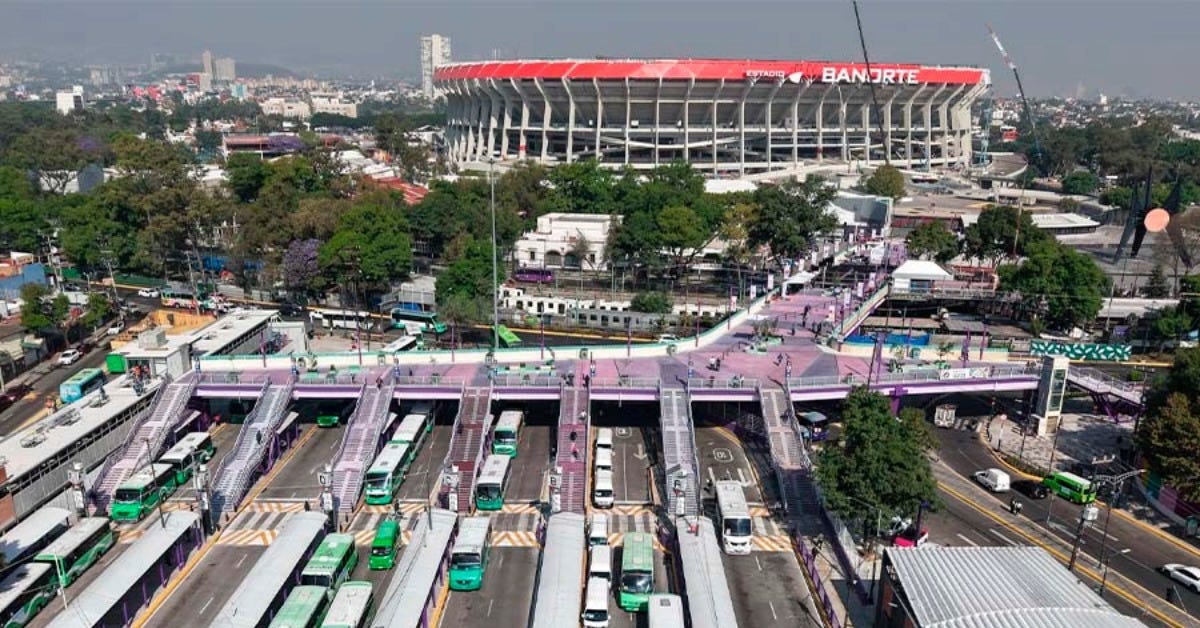
Mexico City’s mobility plan includes work on the Tren Ligero, Metro connections, sidewalks, lighting, cycling infrastructure, and public spaces near the stadium. Officials have framed the work as a long-term improvement, not just a tournament makeover.
That is the promise. The test will be used daily.
The stadium area in southern Mexico City is not easy to manage. Calzada de Tlalpan, Periférico, Acoxpa, Taxqueña, Huipulco, and nearby neighborhoods already face heavy traffic. Match days add pedestrians, buses, ride-hailing vehicles, taxis, police closures, and residents trying to reach their homes.
Recent stadium operations have given a preview of what may come. Authorities used controlled access, road closures, dedicated transport routes, regulated taxis, pedestrian paths, and limits on private vehicles. Residents in restricted areas needed to show proof of address.
Those tools can work. They can also create frustration if communication is poor.
For expats and visitors, the practical lesson is clear. Movement around host cities will change on match days, even for people who never enter a stadium. Public transport may be the best option, but it may also be crowded, rerouted, or controlled near venues. Driving may be slow or impossible near security perimeters.
The same issue applies to Guadalajara and Monterrey, though each city has different geography and transit limits. Stadium access, shuttle systems, rideshare demand, and road closures will shape the visitor experience. They will also shape how residents judge the event.
A successful World Cup transport plan is not one that moves tourists alone. It is one that lets the city keep working.
Security will be visible everywhere
Security at the 2026 World Cup will not be hidden. It will be part of the public experience.
In Mexico City, security will likely combine police deployments, surveillance cameras, access controls, restrictions on drones, crowd barriers, and emergency response teams. The city has also promoted a large expansion of video surveillance as part of its broader World Cup readiness.
In Monterrey, the K9-X robot dogs offer the clearest image of high-tech security. The devices can patrol, record, communicate with operators, and enter risky spaces before human officers. Officials describe them as tools for detecting threats, inspecting suspicious objects, and helping protect police.
There is a reasonable case for using technology in dangerous situations. A robot can inspect a potential explosive device without placing an officer or a real dog in immediate danger. It can carry cameras into areas with limited visibility. It can give command centers more information before people are sent in.
But technology does not remove the need for judgment. It can create new questions.
Who controls the data? How long is the video kept? When is facial recognition used? What happens if a system misreads behavior? Are these tools there to solve a real security gap, or to send a message that the city is modern and prepared?
Those questions should not be dismissed as anti-technology. They are basic public-safety questions.
Large events often encourage cities to buy equipment that remains long after the event ends. Sometimes that equipment becomes useful. Sometimes it becomes expensive theater. Sometimes it expands surveillance without enough public debate.
The K9-X unit will draw attention because robot dogs are unusual and camera-friendly. The more important issue is whether they improve response times, reduce risk, and operate under clear rules.
The spectacle problem
Every World Cup host city wants to look ready. That is normal. The event brings global cameras, visiting officials, sponsors, fans, and investors.
The risk is that preparation becomes more about appearance than function.
A clean sidewalk near a stadium looks good. It matters more if it is safe, accessible, and useful after the tournament. New lighting looks good. It matters more if residents feel safer months later. A renovated transit station looks good. It matters more if trains run better and overcrowding improves.
Mexico City officials have described World Cup works as investments in mobility, public space, and sustainability. Those upgrades include lighting, public transport improvements, and work around the stadium area. Some residents and users have also complained about disruption, dust, delays, and unclear communication during construction.
Both things can be true.
A city can need the upgrades and still execute them poorly. A project can still leave benefits while imposing real costs on people living through the work. A World Cup deadline can speed up public investment, but it can also push decisions faster than residents would prefer.
That is why the post-tournament period matters.
If streets, lighting, transport, and public spaces remain useful after July 2026, the World Cup will have a stronger legacy. If improvements mostly serve visitors and cameras, residents will remember the closures more than the celebration.
Public viewing can be inclusive or controlled
Fan festivals are often described as inclusive because they are free. That is only the first step.
A public viewing site becomes truly inclusive when families feel safe, older adults can sit, people with disabilities can enter and move, public bathrooms are available, prices are reasonable, and residents know how to get home afterward.
It also matters whether people feel watched or welcomed.
Large security operations can protect crowds. They can also change the mood of a public space. Metal barriers, entry checks, cameras, drones, police lines, and controlled exits may be necessary in some places. But if the balance is wrong, a festival can feel less like a civic gathering and more like a managed enclosure.
Mexico City has experience with massive public events, but the World Cup is different because it combines local pride with international branding. FIFA’s commercial rules, sponsor protections, and media needs will interact with local politics and local habits.
That is where the city must be careful.
Mexico’s public plazas are not blank canvases for events. They are places of protest, commerce, family life, performance, memory, and everyday use. Turning them into World Cup venues will require more than screens and stages. It will require respect for how those spaces already work.
What ordinary residents should watch
For residents, the World Cup will not be one thing. It will be a series of daily changes.
Some people will enjoy free matches in public plazas. Some will earn money from visitors. Some will face traffic, noise, blocked streets, or higher prices. Some vendors may gain access to new sales spaces. Others may be moved away from the crowds they need.
For expats living in Mexico, the practical effect will depend on location. Those in Mexico City, Guadalajara, and Monterrey will feel it most. People in other cities may still see tourism campaigns, hotel demand, public screenings, and local celebrations tied to the tournament.
The most useful questions are not only about match schedules. They are about daily logistics.
Will public viewing sites publish clear rules before opening? Will alcohol restrictions be enforced consistently? Will vendor permits be transparent? Will residents near stadiums get clear access plans? Will transit changes be announced early enough? Will police operations protect people without overwhelming public space?
Those answers will shape the experience more than any tourism slogan.
The real legacy test
Mexico has hosted World Cup matches before. The country knows football. It knows crowds. It knows how to turn a match into a public event.
The 2026 challenge is different because the tournament now operates at a larger scale and under tighter commercial, security, and media demands. Mexico is not only hosting football. It hosts a global system that includes sponsors, branding rules, hospitality zones, surveillance tools, and expectations for smooth urban performance.
That system will meet Mexican street life.
It will meet vendors outside stadiums, families in plazas, commuters in packed trains, police managing fan surges, residents showing IDs to reach their homes, and workers trying to keep normal routines during abnormal weeks.
Mexico City’s free fan festivals are an attempt to make the tournament feel public. Monterrey’s robot dogs are an attempt to make it feel secure. The gap between those two goals is where the real story sits.
A World Cup can bring visitors, pride, and investment. It can also reveal which parts of city life are valued and which are pushed aside when the world is watching.
For Mexico, the tournament will not only ask whether the stadiums are ready. It will ask whether the streets are ready, whether the rules are fair, whether security is effective, and whether the people who live in host cities see more than disruption.
That is the World Cup beyond stadiums. And it may be the part residents remember longest.