
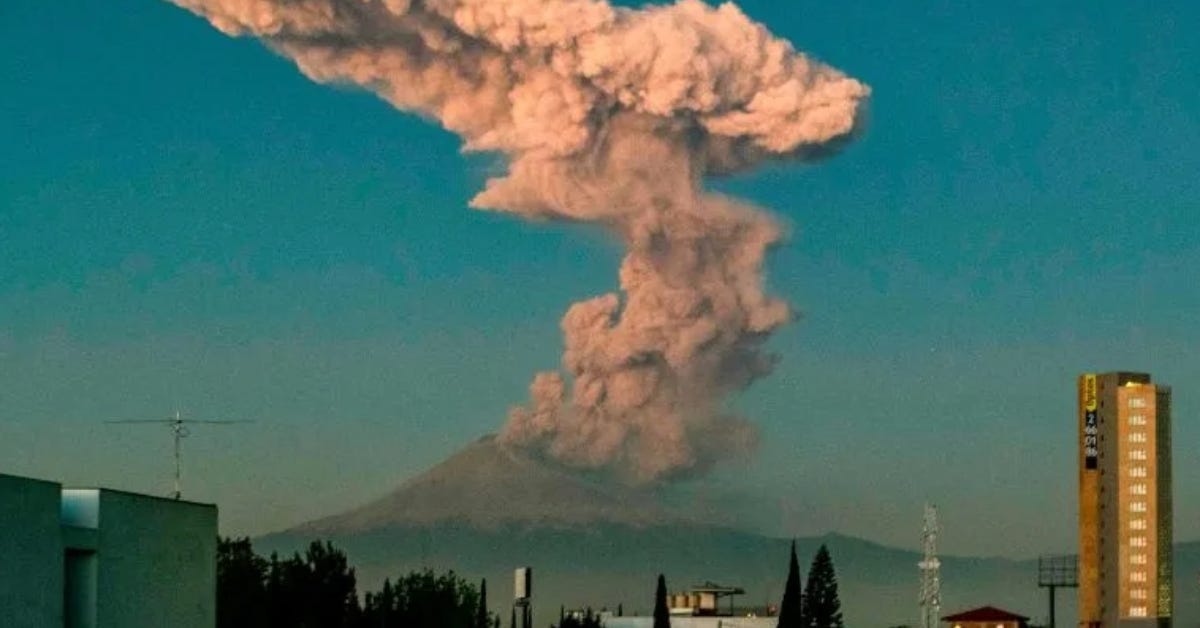
Popocatépetl sits close enough to Mexico City to affect daily life, but not in the way many people imagine. The larger concern for the capital is not lava reaching city streets. It is volcanic ash, a fine abrasive material that can affect breathing, airports, traffic, water systems, and cleanup. Recent official monitoring keeps the volcano under watch, while experts continue to explain what residents should actually prepare for.
Popocatépetl risk for Mexico City is mostly about ash
Mexico City’s main risk from a stronger Popocatépetl eruption is not lava or a fast-moving volcanic flow reaching the capital. The city sits outside the area where the most destructive direct volcanic hazards are expected.
The more realistic concern is heavy ashfall. Ash can travel long distances depending on wind direction, eruption strength, and weather conditions. For Mexico City, that can mean poor air quality, reduced visibility, flight delays, airport closures, traffic problems, and added pressure on public services.
That distinction matters because volcanic risk is often misunderstood. A major eruption near the crater would be more dangerous for nearby communities in Puebla, Morelos, and the State of Mexico. For the capital, the likely problem would be a citywide disruption caused by ash moving through the air and settling on streets, rooftops, cars, and runways.
What the latest monitoring shows
The volcano remains under regular monitoring by federal authorities and UNAM-linked scientific teams. On April 29, monitoring reported 136 low-intensity exhalations, accompanied by water vapor, volcanic gases, and light ashfall. The report also noted tremor activity and short-distance incandescent fragments near the crater.
The Volcanic Alert Traffic Light remained at Yellow Phase 2. That level does not mean evacuation for Mexico City. It means the volcano is active and can produce moderate explosions, ashfall in nearby towns and some more distant cities, volcanic tremor, and hazards inside the exclusion zone.
Authorities continue to warn people not to approach the crater. The 12-kilometer exclusion zone remains in place because explosions can throw fragments without much warning. In heavy rain, ravines near the volcano can also carry mud and debris flows.
How ash could affect daily life in the capital
For residents of Mexico City, the first impact of ash would likely be practical. Fine ash can irritate the eyes, nose, and throat. It can worsen symptoms for people with asthma, bronchitis, allergies, or other respiratory conditions.
Ash is also abrasive. It can damage car filters, scratch windshields, and affect machinery if it is not cleaned properly. When mixed with water, it can become heavy and clog drains. That is why authorities advise sweeping ash into bags instead of washing it into the street.
Airports are among the most sensitive pieces of infrastructure. Ash can reduce visibility and create risks for aircraft engines. Mexico City has already seen this risk before. In May 2023, volcanic ash led to a temporary halt in operations at Mexico City International Airport.
A similar event today could affect not only travelers but also cargo movement, airport staffing, traffic near terminals, and connecting transportation. For expats and frequent travelers, this is the most likely way a stronger ash event could interrupt plans.
What residents should do during ashfall
The basic recommendations are simple and practical. During ashfall, residents should stay indoors when possible, keep doors and windows closed, and avoid outdoor exercise.
People who must go outside should protect their noses and mouths. Eye protection can also help, especially because ash particles can irritate the eyes. Contact lenses may be uncomfortable during ash events.
At home, water tanks and food should be covered. Pets should be brought indoors when possible. Ash should be swept up carefully and placed in bags. It should not be sprayed with water or pushed into drains.
These steps may sound basic, but they help address the two most common urban problems caused by ashfall: breathing exposure and clogged drainage.
A separate long-term volcanic concern south of the city
The recent discussion also revived a separate scientific issue: the possibility of a new volcano forming one day south of Mexico City. That is not the same as Popocatépetl erupting.
The southern edge of the capital lies within a volcanic field that includes the Xitle volcano. Xitle erupted roughly 2,000 years ago and helped form the Pedregal area near southern Mexico City. Researchers have studied whether another small volcano could eventually form in the region.
That does not mean a new volcano is about to appear. The timing and location remain uncertain. It is better understood as a long-term geological issue rather than an immediate emergency.
The clearest takeaway for Mexico City
Popocatépetl is one of Mexico’s most closely watched volcanoes. Its activity can change, but current public guidance remains centered on monitoring, avoiding the exclusion zone, and preparing for ash.
For Mexico City, the most useful preparation is not fear of lava. It is knowing how to respond if ash reaches the capital. That means protecting breathing, keeping ash out of drains, watching official updates, and allowing extra time if airport or road disruptions occur.
The risk is real, but it is also specific. For the capital, ashfall is the main concern.
Popocatepetl volcano activity keeps Yellow Phase 2
Popocatépetl Volcano Activity Halts Mexico City International Airport Operations
Popocatépetl Volcano Erupts, Sending Ash to Mexico City and Surrounding Areas