
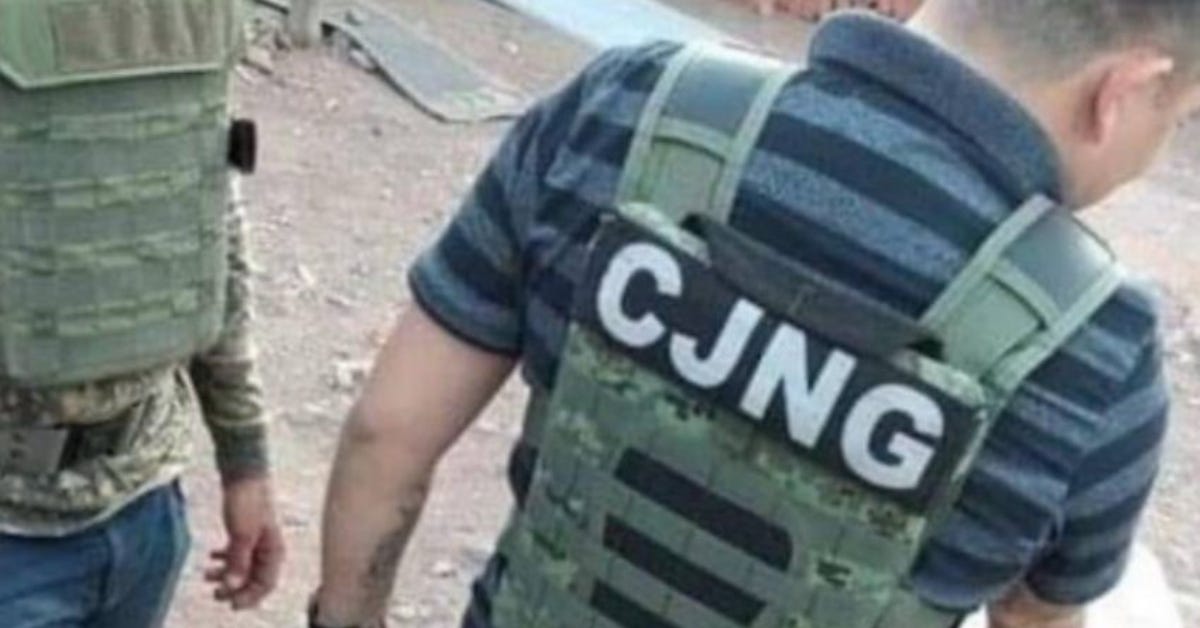
On Feb. 22, Puerto Vallarta woke up to a kind of fear the city rarely has to name out loud. Roadblocks, fires, disrupted flights—suddenly, the beach town felt like part of a national security story again. But the shock of today lands on older memories: a former governor shot in a restaurant, men taken from a dining room in the hotel zone, a deadly ambush on the mountain road out of town. This is the thread that keeps returning, and what it means for residents and visitors now.
A resort morning that turned tense
For most people, Puerto Vallarta is routine. School drop-offs. Coffee runs. A workday that starts with emails and ends at the Malecón. Tourism keeps the city moving, and the rhythm is so familiar that it can feel protected by repetition.
That’s why Feb. 22 hit as hard as it did. The violence that followed the killing of the CJNG’s top leader didn’t just make headlines; it altered the most basic expectations of the day. Roads that usually connect neighborhoods and beach zones became obstacles. Smoke became a marker on the skyline. Travel plans collapsed in real time as airlines canceled flights and people recalculated what “getting home” would even mean.
The fear wasn’t abstract. It was practical. Parents asked whether it was safe to leave the house. Workers wondered if they should risk crossing town. Business owners watched a Sunday vanish. Visitors who came for a soft version of Mexico suddenly had to learn the vocabulary of shelter-in-place.
The city has seen this kind of shock before
Puerto Vallarta’s reputation is not imaginary. Compared with many parts of Mexico, the city is often spared the sustained violence that reshapes daily life elsewhere. But “often” is not “always,” and the record of recent years makes that plain.
In late 2020, the city became the setting for one of Mexico’s most high-profile political killings in the modern era. Former Jalisco governor Aristóteles Sandoval was shot in a restaurant bathroom in Puerto Vallarta. The killing was followed by allegations that the crime scene was manipulated, a detail that only deepened public anger because it suggested not just violence, but protection.
That same season brought another jolt. Real-estate developer Felipe Tomé Velázquez was kidnapped after leaving a restaurant in the Marina Vallarta area. His body was later found in neighboring Nayarit. The message people took from it was brutal in its simplicity: even those with money, visibility, and connections can be taken, and the coastline doesn’t guarantee distance from the country’s criminal conflicts.
Earlier that year, in July 2020, a group visiting Puerto Vallarta was attacked in a residential area of the city. One person was killed, and others disappeared amid an investigation that raised the possibility of kidnapping. It was the kind of incident that disrupts a city’s sense of boundaries, because it happened away from the usual mental map of “safe tourist zones” and “risky places.”
And in August 2016, the violence was brazen enough to unfold in a restaurant dining room. Gunmen abducted a group from La Leche, a well-known restaurant in the city’s hotel zone corridor. Authorities linked the abduction to cartel rivalry, the kind of contest that turns public spaces into stages and ordinary people into bystanders.
The shadow stretches further back. In 2015, a convoy of Jalisco state police was ambushed in the mountain corridor near Puerto Vallarta, leaving 15 officers dead. That attack mattered not only because of the death toll, but because it showed how close major cartel violence could come to the resort city’s doorstep, on the roads that connect Vallarta to the rest of Jalisco. That same year, an investigative police commander was shot and killed at a taquería in Puerto Vallarta, a reminder that the violence is not always distant or anonymous; sometimes it arrives as a targeted act in a normal place at a normal hour.
Even earlier, in 2011, authorities reported a shootout in Puerto Vallarta that left a soldier seriously wounded and led to detentions of men identified as CJNG members. In 2009, narcomessages appeared in and around the region amid police violence. These episodes don’t define the city’s everyday life, but they puncture the idea that cartel activity is something that happens only “somewhere else.”
Why Puerto Vallarta gets pulled into bigger wars
It’s tempting to treat each outbreak as an exception, an aberration that can be filed away once the roads reopen and the smoke clears. But Puerto Vallarta’s geography and economy make it difficult to keep cartel dynamics at a distance.
The city sits in a strategic corridor between the coast and the highlands, close to routes connecting ports, highways, and regional hubs. It is also a place where large amounts of cash move through tourism, nightlife, construction, and services. That mix can attract criminal groups that want to control territory, extract money, move people or goods, or launder profits through legitimate-looking activity.
At the same time, Puerto Vallarta’s brand creates a second kind of vulnerability: when violence breaks through, the damage isn’t only physical. It hits confidence. It hits bookings. It hits the informal promises that sustain a tourism economy—that the beach is a pause from the country’s harder realities.
That’s why days like Feb. 22 feel so destabilizing. They don’t just interrupt life; they remind residents and visitors that the city’s calm is conditional, and that cartel conflicts operate on timelines and logic that don’t respect tourist seasons or municipal borders.
What this means for the people who call it home
There is a difference between realism and panic, and Puerto Vallarta needs realism right now. Most days here are still ordinary. Most people still live normal lives. The city remains a place where millions come and go without ever encountering violence directly.
But today also demands honesty: Puerto Vallarta is not a utopia, and it is not immune. The violence of Feb. 22 wasn’t the first time cartels disrupted life here, and nothing in Mexico’s recent history allows anyone to promise it will be the last.
For expats, that reality can be complicated. Many moved to Puerto Vallarta precisely because it felt calmer than the places they came from, or calmer than other parts of Mexico they’d visited. The instinct in moments like this is to search for certainty, to find the single update that makes everything clear. Usually, it doesn’t exist.
What does exist is a better approach to information and risk. Pay attention to official updates, especially those involving road access, airports, and school or service closures. Treat rumors as noise until they are confirmed. Understand that the sharpest danger in these flare-ups is often tied to movement and proximity—being in the wrong place as authorities and armed groups collide, or getting trapped in a situation you didn’t anticipate because a route that was safe an hour ago isn’t safe now.
The larger lesson is uncomfortable but useful. Puerto Vallarta’s relative peace is real, and it’s worth defending. But it’s also fragile. The city’s future will be shaped not just by its beaches and development projects, but also by whether Mexico can reduce organized crime’s power without triggering retaliatory shocks that make civilians pay.
Recent Cartel Violence in Puerto Vallarta
Dec. 18, 2020 — Assassination of former Jalisco governor Aristóteles Sandoval (Puerto Vallarta)
Reuters reported Sandoval was shot dead in a restaurant bathroom in Puerto Vallarta; investigators suspected CJNG involvement and described crime-scene manipulation at the venue.
Nov. 22–25, 2020 — Kidnapping of real-estate developer Felipe Tomé Velázquez (Puerto Vallarta → body found in Nayarit)
La Jornada reported Tomé was kidnapped in Puerto Vallarta after leaving a restaurant in Marina Vallarta; the incident involved a shooting in which another man died. His body was later identified after being found on a highway in Compostela, Nayarit, with signs of violence and gunshot wounds.
July 18, 2020 — Attack on visiting group in Fluvial Vallarta; one killed, others missing (possible kidnapping)
The Associated Press (via The Washington Post) reported a group visiting Puerto Vallarta was attacked in a residential area, leaving one dead and others missing; authorities said they were investigating possible kidnapping.
Aug. 15–16, 2016 — Mass abduction from the La Leche restaurant (Puerto Vallarta)
Reuters reported gunmen abducted a group from a restaurant in central Puerto Vallarta; in a follow-up, Reuters cited the Jalisco attorney general saying those taken were believed to be members of the Sinaloa cartel, in a context of rivalry with CJNG in Jalisco.
Apr. 6, 2015 — CJNG-linked ambush near Puerto Vallarta kills 15 state police (San Sebastián del Oeste/Soyatán corridor)
Reuters reported 15 Jalisco state police were killed in an ambush near Puerto Vallarta (Soyatán, San Sebastián del Oeste municipality).
July 17, 2015 — Investigative police commander killed in Puerto Vallarta
UDGTV reported an FGE investigative commander, Óscar González Ortiz, was shot dead at a taquería in PV by an armed group; the same report notes he worked investigations into executions/disappearances in the region and references a prior operation involving a suspected CJNG member.
June 17–22, 2011 — Shootout with the Army; detainees identified as CJNG
El Informador reported four men identified as CJNG members were processed after a shootout with soldiers in Puerto Vallarta that left a soldier seriously wounded, according to the report.
May 2009 — Narcomanta case linked to a dead police officer (Ixtapa area)
El Informador reported a “narcomanta” incident in PV that it said could be related to the body of a police officer found near the Ixtapa municipal cemetery days earlier.