
Canada is no longer described only as a northern border concern in the latest U.S. drug strategy. The White House now says Mexican criminal groups have established a stronger foothold there, including synthetic drug production tied to fentanyl and nitazenes. The claim adds a new layer to North America’s cartel fight, while Canadian officials point to their own enforcement actions and say southbound fentanyl seizures remain small compared with the U.S.-Mexico border.
White House report identifies Canada as operating hub for Mexican cartels
The latest U.S. drug control strategy places Canada in a more prominent role in the fight against Mexican cartels, saying criminal groups have used the country as a platform for synthetic drug production.
The document identifies the northern border as more than a secondary smuggling route. It says Mexican transnational criminal organizations have gained an operational foothold in Canada, alongside Canada-based criminal networks and outlaw motorcycle gangs.
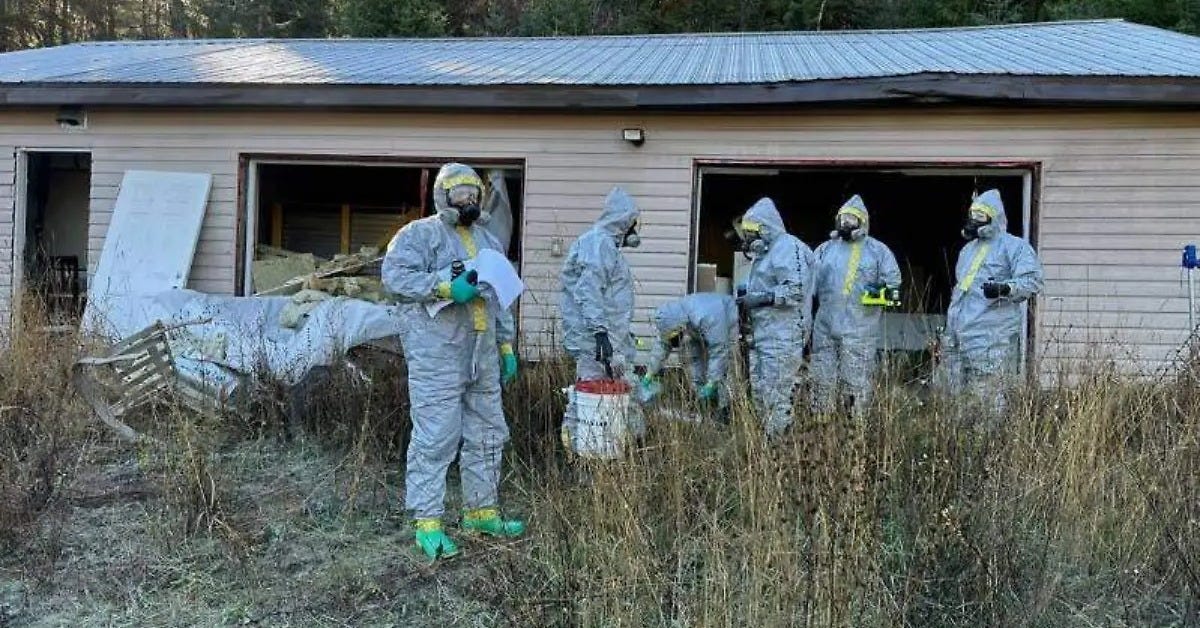
The report also points to the presence of fentanyl and nitazene synthesis labs in Canada. According to the U.S. strategy, that shift could help criminal groups shorten supply chains and avoid some enforcement pressure at the U.S.-Mexico border.
A wider map for cartel operations
For years, U.S. drug policy has centered heavily on Mexico, especially the movement of fentanyl, methamphetamine, and precursor chemicals through the southern border. The new strategy keeps Mexico at the center of that discussion, but it also expands the map.
The report describes the U.S.-Canada border as vulnerable because of its length, remote terrain, shared waterways, and high volume of legal trade and travel. It says those conditions can be exploited by transnational criminal organizations moving drugs, money, firearms, and other contraband.
The strategy does not present Canada as replacing Mexico in the synthetic drug trade. Instead, it frames Canada as an additional production and transit concern. That distinction matters because the report still identifies Mexican cartels as central players in the fentanyl supply chain.
Sinaloa and CJNG remain central targets
U.S. agencies continue to focus on the Sinaloa Cartel and the Cártel Jalisco Nueva Generación (CJNG). Both groups were designated foreign terrorist organizations by the United States in 2025.
The U.S. Drug Enforcement Administration has described both as major drivers of the synthetic drug crisis. The agency says the two Mexican-based cartels are tied to fentanyl, methamphetamine, and large distribution networks that operate beyond Mexico.
Canada also listed several Latin American criminal organizations as terrorist entities in 2025. Those included the Sinaloa Cartel and CJNG. Canadian officials said the move gave law enforcement more tools to freeze assets and pursue terrorism-related offenses.
Canada has reported its own fentanyl lab problem
Canadian public safety records show the country has already faced domestic fentanyl production concerns. Between 2018 and 2023, Canadian law enforcement dismantled 40 sites where evidence of illegal fentanyl production was found.
Canadian officials have also cited the dismantling of a major drug “super lab” in British Columbia in 2024. Authorities said that the operation prevented millions of potentially lethal fentanyl doses from reaching communities or being exported.
Those details support the broader concern that Canada has become part of the synthetic drug production picture. However, Canadian officials have also pushed back against the idea that Canada is a major fentanyl source for the United States.
The numbers remain disputed
Canada’s public safety department has said fentanyl seizures moving from Canada into the United States remain minimal. In a 2026 briefing note, officials said those seizures represented well below 1 percent of U.S. border fentanyl seizures.
The same Canadian document said 136 pounds of fentanyl were seized along the U.S. northern border between January 2022 and August 2025. It compared that with more than 73,000 pounds seized at the U.S. southwest border during the same period.
That contrast does not erase the risk described by the White House. It does show the political tension around the issue. Washington is treating Canada as an emerging operational concern, while Ottawa is stressing that the largest flow still comes through the southern border.
What changes under the new strategy
The U.S. strategy calls for deeper intelligence sharing with Canadian agencies, including the Royal Canadian Mounted Police and the Canada Border Services Agency. It also calls for joint operations aimed at dismantling synthetic drug laboratories in Canada.
The document also highlights cross-border money flows. It says U.S. officials plan to work with Canada’s financial intelligence agency to identify and disrupt illicit proceeds tied to drug networks.
For readers in Mexico, the larger point is that cartel activity is being treated less as a local or even bilateral issue. The new U.S. framing presents Mexican cartels as regional and global actors, with operations stretching across supply chains, financial systems, and borders.
That framing could affect future pressure on Mexico, Canada, and private businesses. It may also shape how the United States uses sanctions, border measures, extradition requests, and law enforcement cooperation in the months ahead.