
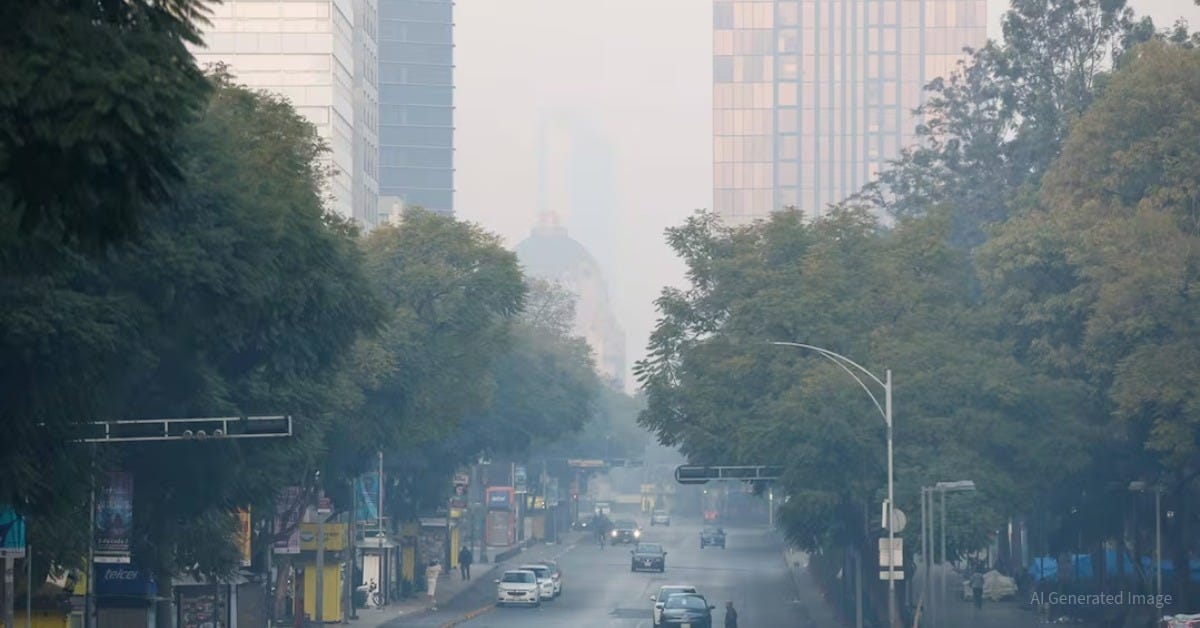
World Cup 2026 is expected to become the most polluting World Cup ever, with one climate assessment estimating more than 9 million tonnes of CO₂-equivalent emissions from the expanded tournament.
The concern is not centered on stadium construction. It is tied mainly to long-distance air travel across the United States, Mexico, and Canada, where 48 teams will play 104 matches in 16 host cities between June 11 and July 19.
Mexico will host matches in Mexico City, Guadalajara, and Monterrey, including the opening game at Mexico City Stadium. Puerto Vallarta is not a host city, but the tournament has already shaped local planning, hotel expectations, and public viewing events, as covered in PVDN’s World Cup 2026 reporting.
Travel is driving the climate cost
The emissions estimate comes from research by Scientists for Global Responsibility and partner organizations, which calculated that about 9.02 million tonnes of CO₂e were emitted for the 2026 tournament. The group said the figure is almost double the average for World Cups held from 2010 through 2022.
A separate assessment cited this week estimated a lower but still record-level footprint of 7.8 million metric tons of carbon dioxide. That estimate also found travel to be the dominant source, with fans, teams, media, and tournament operations moving across a continental footprint.
The tournament’s design reduces one environmental burden but increases another. No new stadiums were built for the event, which lowers construction emissions. But the larger field and spread-out host map mean more flights between distant cities.
Madeleine Orr, a sports ecologist and author of “Warming Up,” described the expanded World Cup as “bad from a climate standpoint” in a Reuters interview.
Mexico’s role in the tournament
Mexico’s World Cup share includes five matches in Mexico City, four in Guadalajara, and four in Monterrey, based on the official host-city schedules and FIFA venue information. The Mexico City host committee lists the opening match between Mexico and South Africa for June 11 at 1 p.m. Central time, followed by additional group and knockout matches in the capital.
Guadalajara and Monterrey are also part of the tournament map. FIFA has said Guadalajara Stadium will host four group-stage games, while Monterrey Stadium will host three group games and a round-of-32 match.
That puts Mexico at the center of the event’s tourism and mobility pressure, even though the majority of matches will be played in the United States. It also places the climate discussion alongside other World Cup concerns already facing Mexican cities, including traffic, security, hotel demand, and public viewing costs.
In Puerto Vallarta, the event is being treated as a tourism opportunity even without local matches. PVDN previously reported that World Cup 2026 could make June a stronger tourism month for Puerto Vallarta, as fans add beach destinations to their travel plans or gather to watch televised games.
FIFA says it has a sustainability plan
FIFA has published a Sustainability and Human Rights Strategy for the tournament, including goals tied to emissions, resource efficiency, waste, transportation, and host-city planning.
In response to criticism, FIFA has pointed to existing stadiums, public transportation, recycling, food-waste programs, and efforts to reduce reliance on diesel generators. The organization has also said environmental initiatives are being implemented with host cities before, during, and after the tournament.
Climate researchers argue that those measures do not fully address the largest source of emissions. Samran Ali of the Environmental Defense Fund said “environmental responsibility cannot be an afterthought,” calling for transparent accounting and real emissions cuts.
The climate debate comes as Mexico faces broader environmental pressures from heat, storms, drought, and urban air quality issues. PVDN recently reported on warnings that climate change could displace millions of people in Mexico by 2050, underscoring how global events now fit within a much larger climate story.