
It’s a beautiful afternoon in Mexico. You’re sitting at your favorite café, checking WhatsApp, scrolling through Facebook, and maybe watching that little blue dot on Google Maps as you figure out where to meet friends for dinner.
Nothing particularly interesting about your afternoon. Except your phone is quietly generating a record of your digital activity, and some of that information can be kept for two years.
And Mexico’s Supreme Court just said that’s constitutional.
Your phone company remembers more than you think.
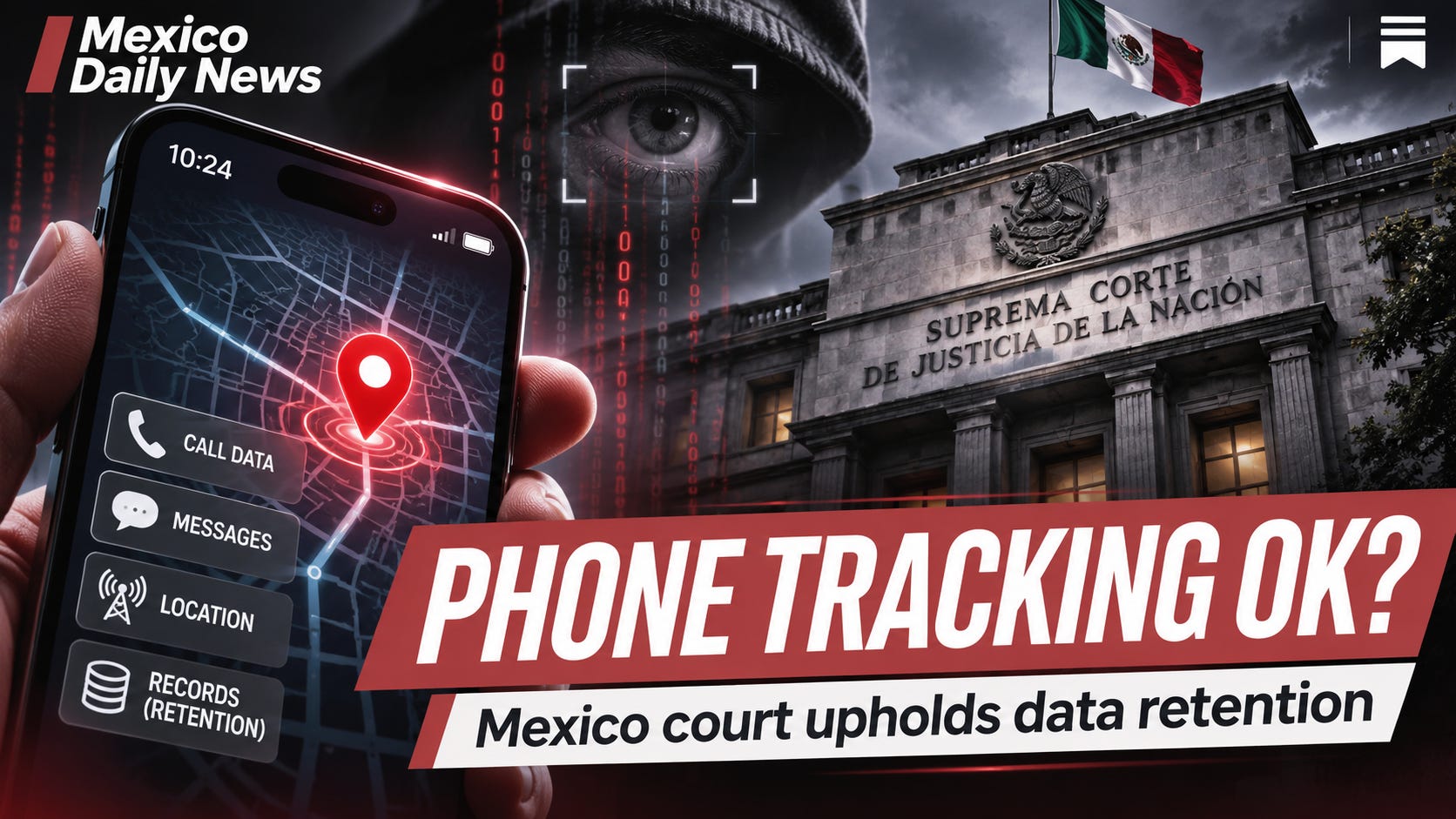
On Tuesday, November 17, Mexico’s Supreme Court of Justice (SCJN), the country’s highest court, upheld provisions of a 2025 telecommunications law requiring phone companies to retain certain customer records for up to 24 months.
We’re talking about what’s known as metadata. That’s a fancy word for information about your communications rather than the conversations themselves.
Think phone numbers, when calls were made, how long they lasted, and other technical information associated with your mobile service.
No, this doesn’t mean Telcel is recording every conversation with your mother or saving the contents of your WhatsApp chats.
But there’s something worth considering here.
Someone doesn’t necessarily need to hear your conversations to learn quite a bit about your life.
A record of who you contact, when you contact them, and how frequently those conversations happen can reveal patterns you might never think twice about.
And that’s where this story gets interesting.
So, can Mexican authorities track your phone?
Well, yes. Under certain legal circumstances, telecommunications providers must cooperate with authorities seeking the real-time location of a mobile device.
But before imagining government employees spending their afternoons watching everyone move around Puerto Vallarta, there’s an important distinction.
The Supreme Court affirmed that accessing stored communications records requires authorization from a federal judge, supported by specific legal reasons.
Live phone location requests are treated differently. They must come from legally authorized officials, have a written justification, and comply with applicable laws. The exact circumstances requiring advance judicial approval are more complicated than some headlines suggest.
In other words, Tuesday’s ruling did not give every police officer unlimited access to everyone’s phone.
And these aren’t entirely new powers. The court was reviewing rules contained in legislation enacted in 2025, not announcing a brand-new surveillance system.
There’s a reason authorities want this information.
Imagine a kidnapping investigation where knowing the approximate location of a phone could help authorities find someone in danger.
Or investigators trying to reconstruct communications between people involved in an organized criminal operation.
It’s not difficult to understand why law enforcement agencies consider these tools valuable.
But here’s the other side of that conversation.
What happens when information collected for legitimate investigations is misused? Who checks that requests are justified? And what protections exist for someone who was never suspected of a crime in the first place?
Those questions don’t disappear just because the Supreme Court has upheld the law.
What does this mean if you’re living in Mexico?
For Americans, Canadians, and other foreigners using Mexican mobile providers, this isn’t some distant legal debate reserved for Mexican citizens.
The rules concern telecommunications services and their users, regardless of whether someone was born in Mexico or moved here last year.
You don’t need to change your phone, delete WhatsApp, or suddenly become paranoid about checking Google Maps.
But it’s worth understanding that your smartphone is more than a convenient little device for restaurant recommendations, banking, and staying in touch with family.
It also produces a trail of information about your everyday life.
And depending on the circumstances, some of that information can become part of a government investigation.
Here’s what I keep coming back to.
We tend to think of privacy as protecting the things we say.
But what about the things we do?
Where we go, who we contact, and the patterns we establish without even realizing it?
Mexico’s Supreme Court has decided that keeping certain telecommunications records and permitting legally regulated access to them is compatible with the country’s Constitution.
The more personal question is whether the safeguards surrounding that information will work as intended.
Because the real issue isn’t simply whether authorities can locate a phone.
It’s who gets to make that decision, under what circumstances, and who makes sure the rules are followed.
And that’s a conversation worth having long before anyone comes looking for your little blue dot.